Personal projects / Materials & heat
Carbon-arc furnace
An early heat-source experiment that highlighted the problems of carbon contamination and electrode wear.
Open the numbered review →Furnace trials and samples
Photos 28–34
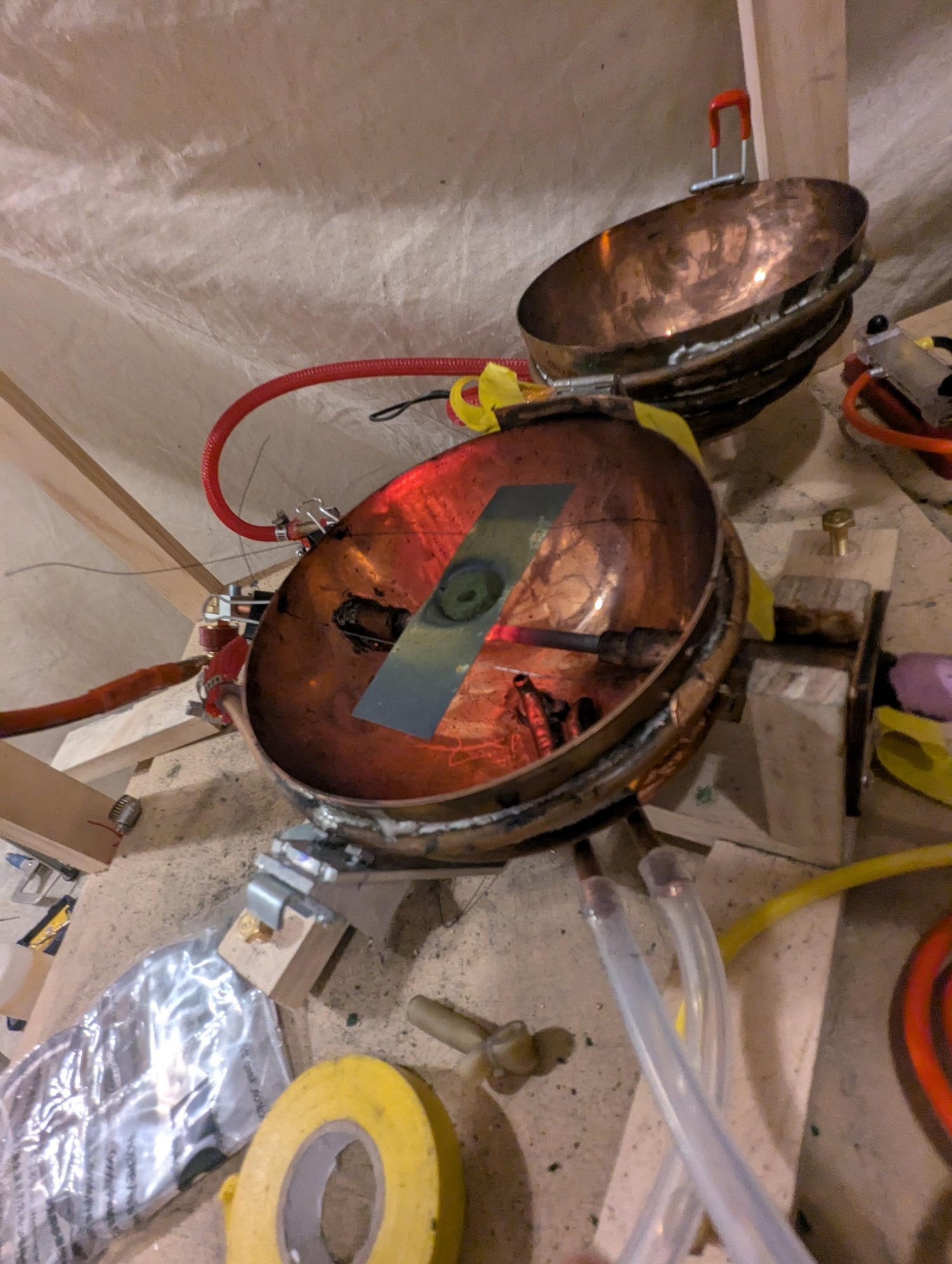
Before using tungsten filaments, I tried heating alumina on a tungsten plate with an arc between two carbon electrodes. I positioned the arc close to the plate, but the approach introduced heavy carbon contamination and did not achieve the heating result I wanted.
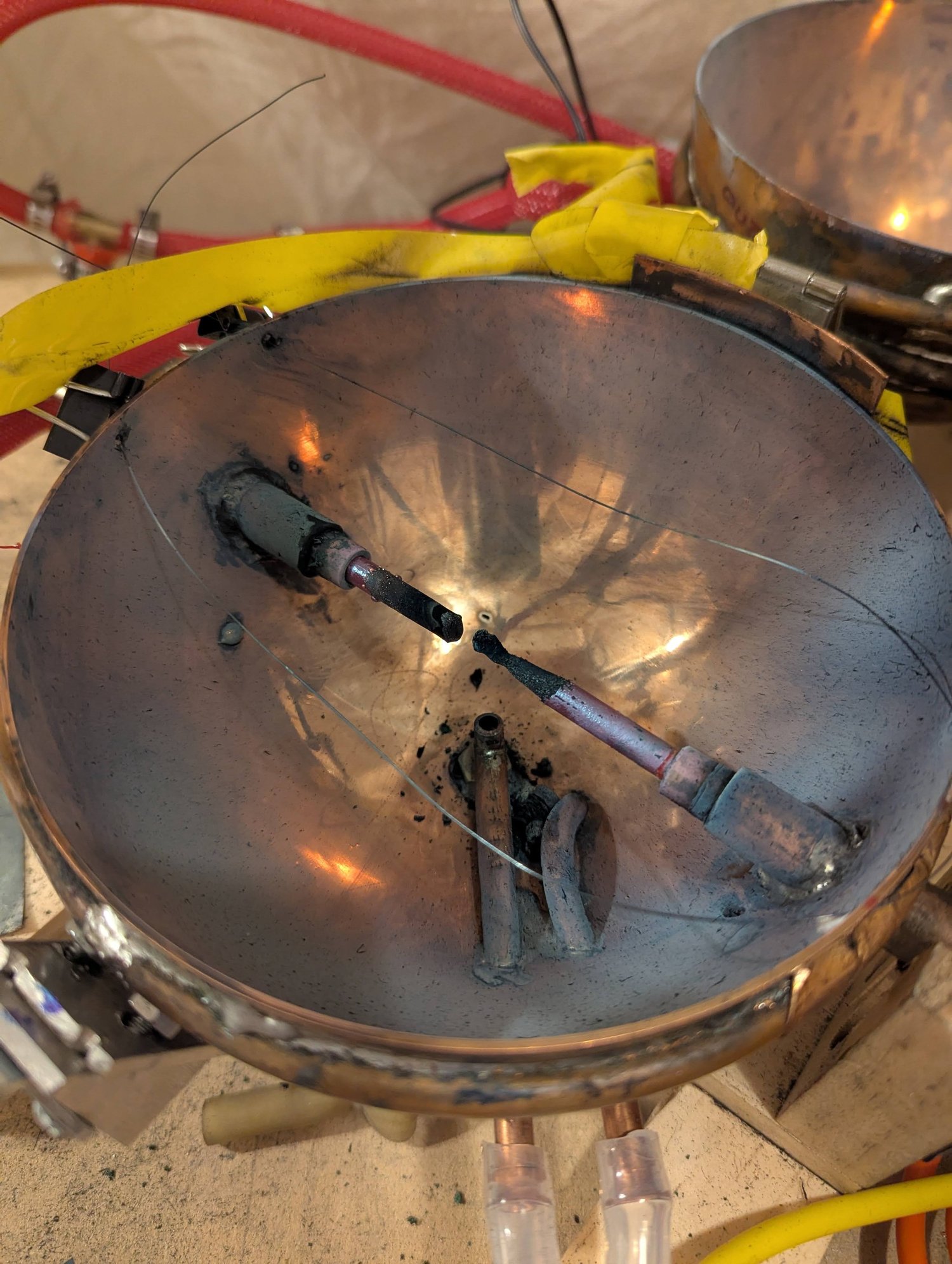
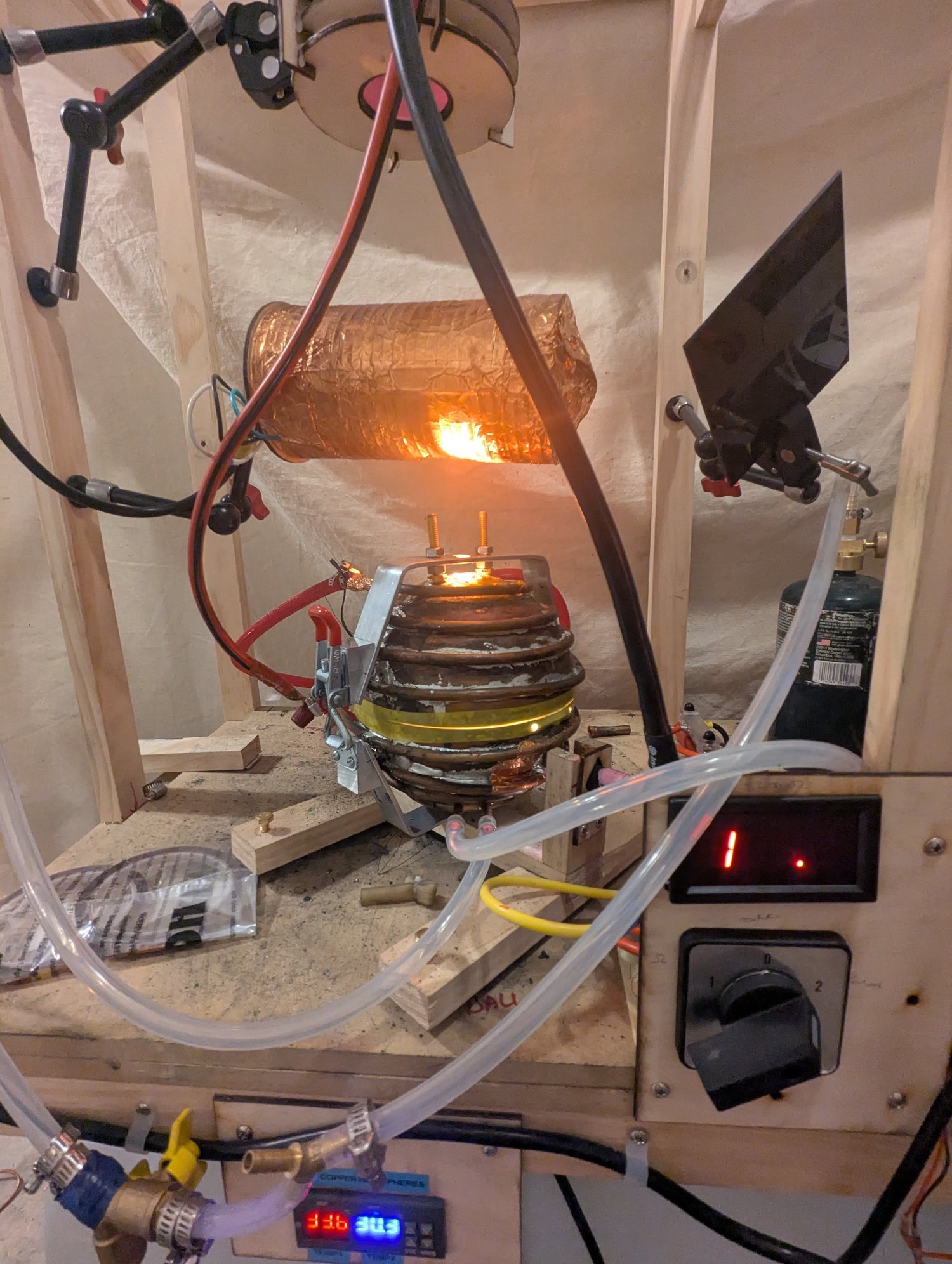
The bright carbon arc during a heating test. The electrodes were consumed as it ran, so they needed to be advanced to maintain the arc. Automating that movement would have added another control system, making this approach less attractive for the furnace.
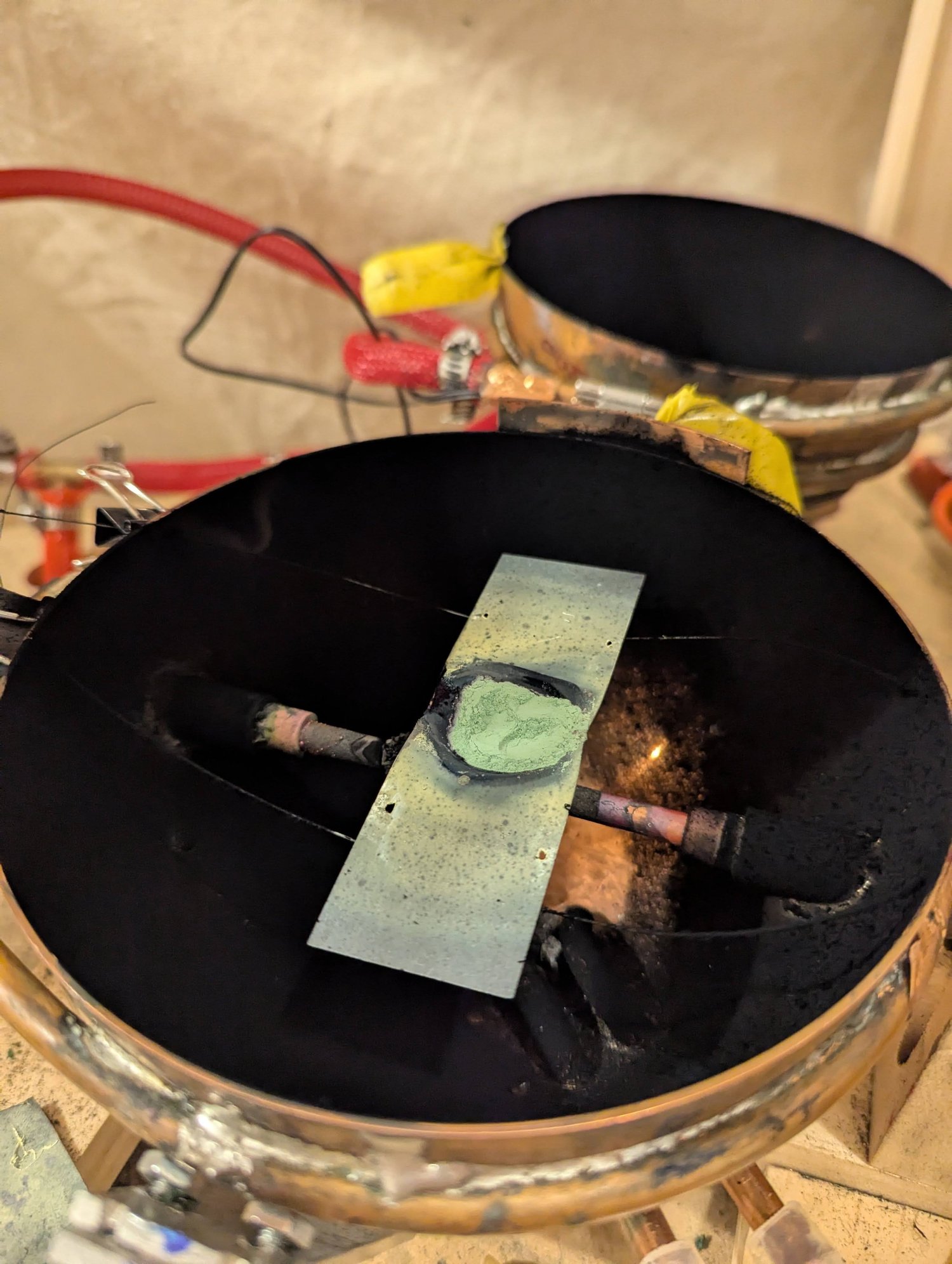
Soot coats the inside of the copper hemispheres after carbon-arc heating. The contamination was one of the main reasons I abandoned this heat source: carbon was being introduced into a process where I wanted to control the material’s purity.
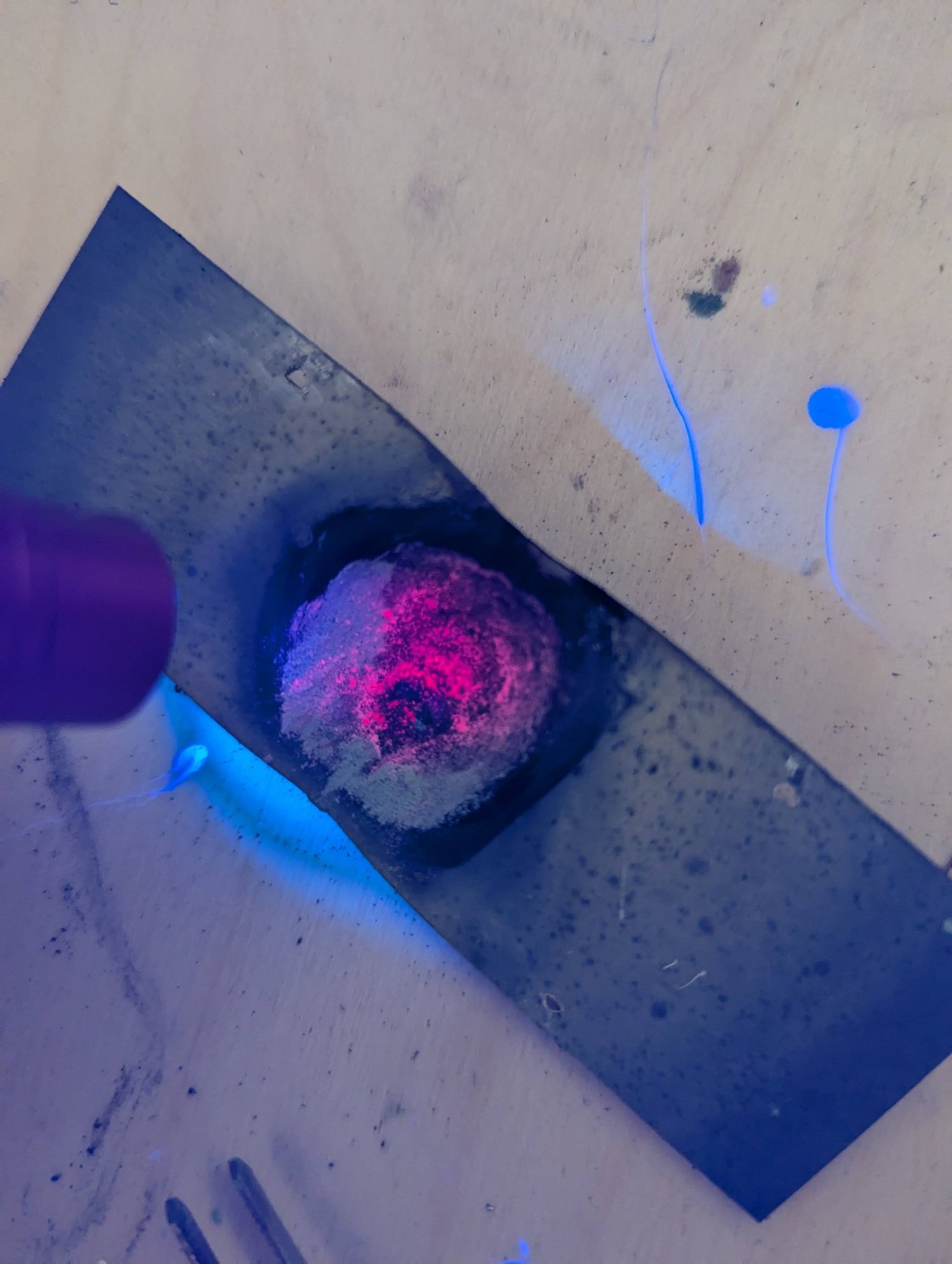
The alumina sample under ultraviolet light after a carbon-arc heating test, showing some fluorescence. Even with this visible response, the contamination, electrode-feeding requirements, and limited heating performance made the approach unsuitable for the experiment I wanted to pursue.
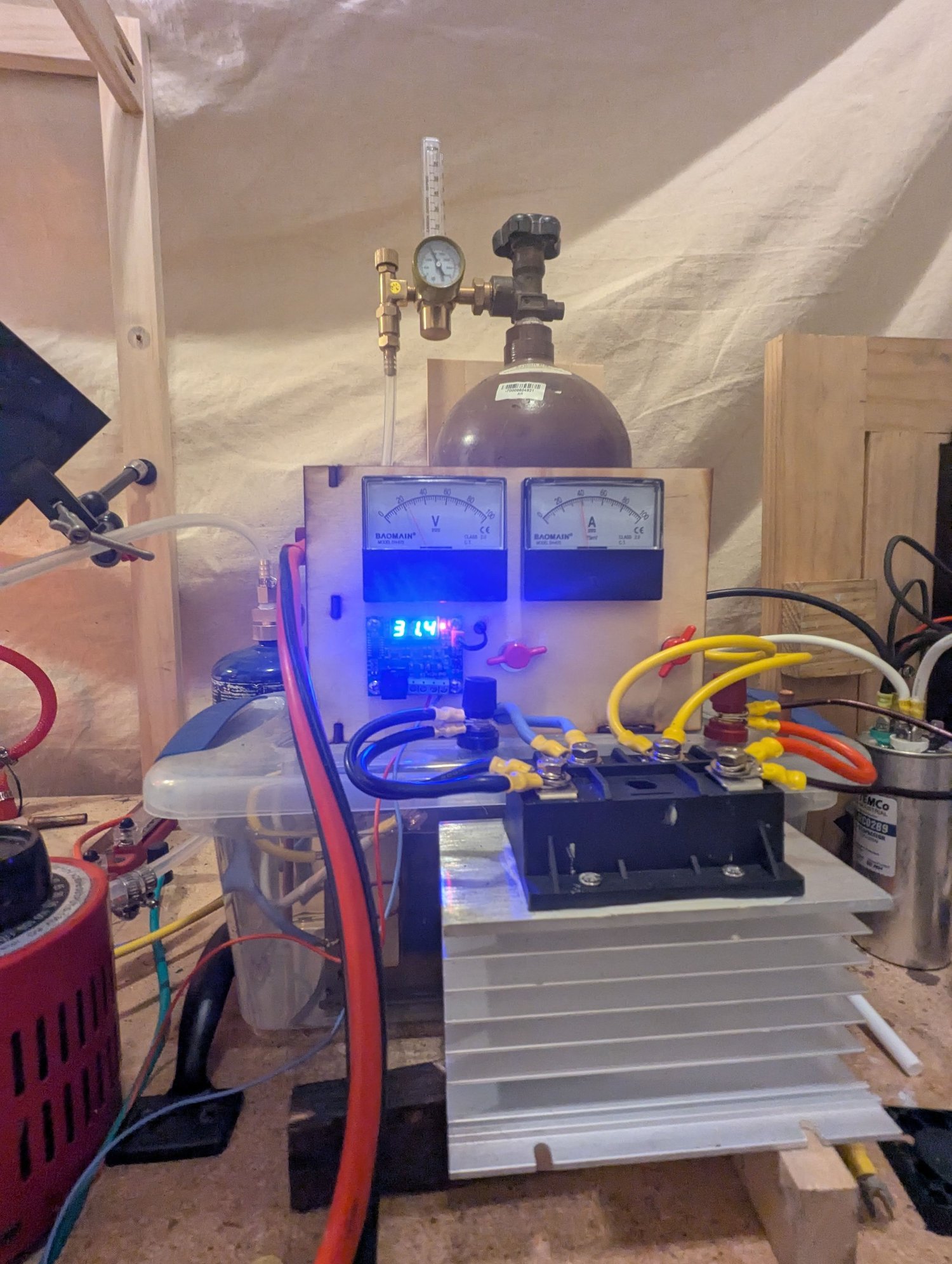
The carbon-arc heat source during a furnace test. An electrical discharge between the carbon electrodes produced the intense light and heat. Keeping the arc running as the electrodes wore away was one of the practical challenges of this design.
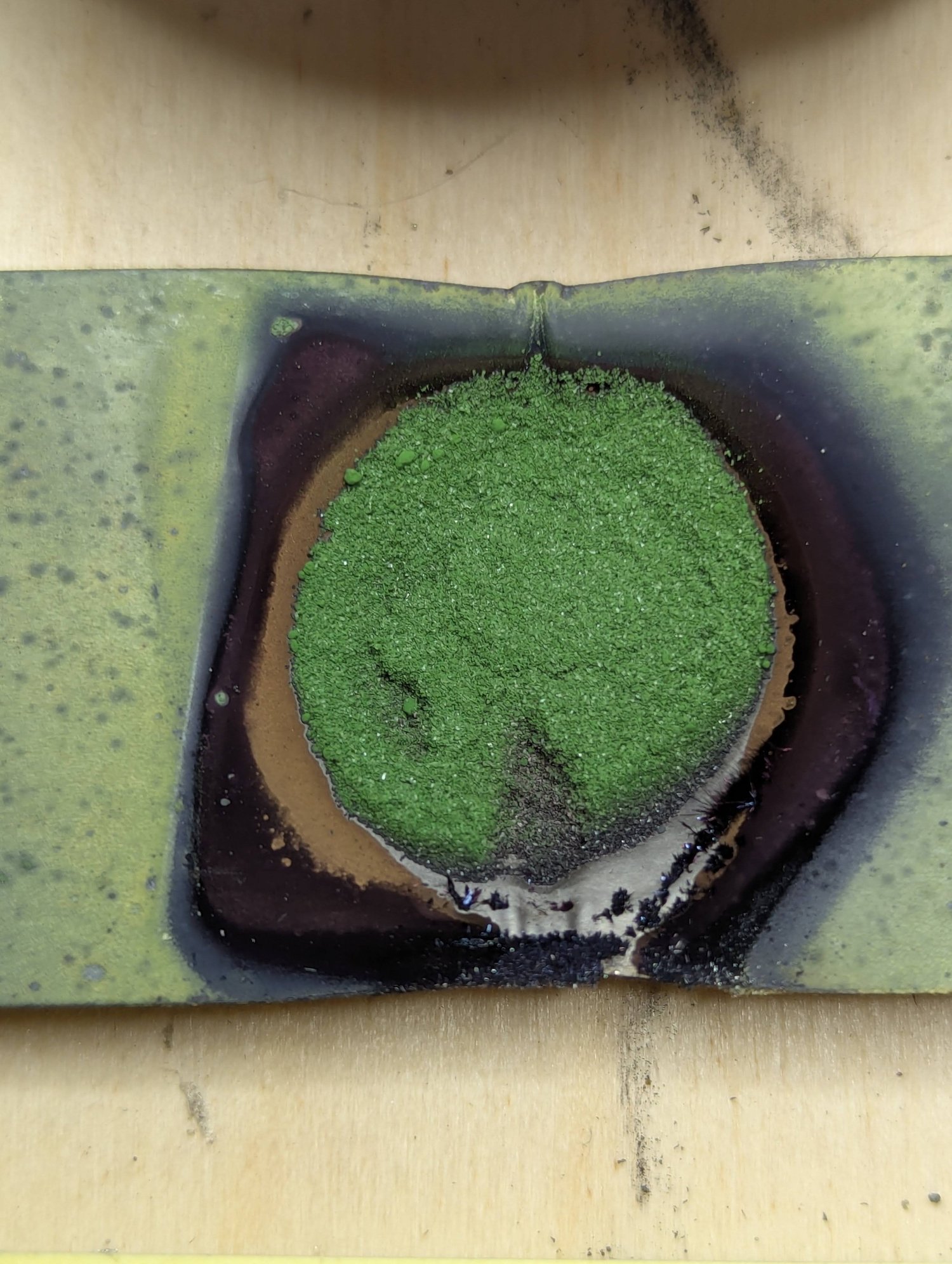
Another image from the carbon-arc furnace experiments. These trials helped me compare heat sources and understand the effects of contamination before moving on to tungsten-filament heating.