Personal projects / Materials & heat
Early plasma vacuum chamber
My first vacuum-chamber experiments and the lessons learned from producing plasma inside a glass bell jar.
Open the numbered review →Chamber and plasma tests
Photos 170–176
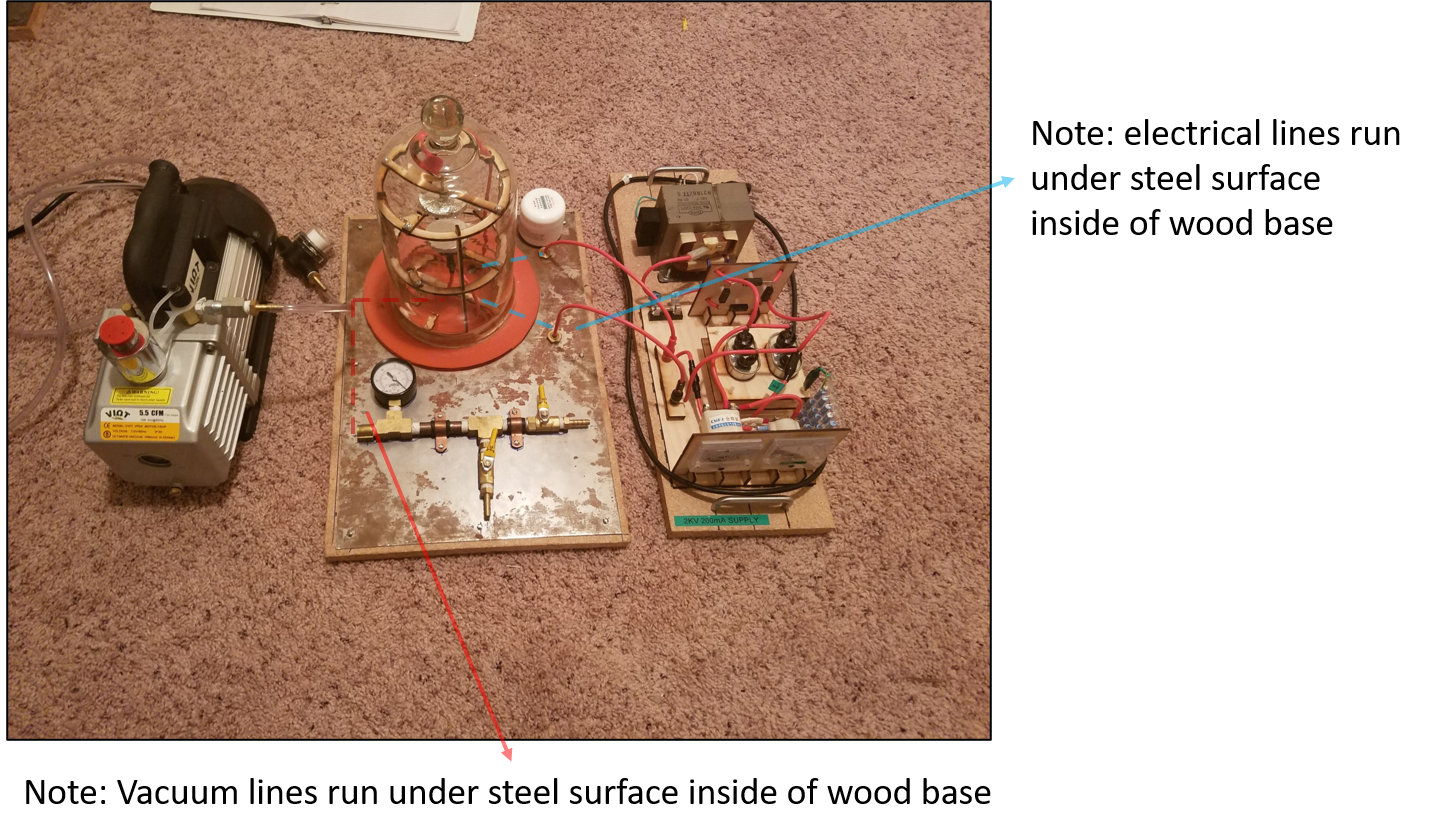
What I believe was my first vacuum chamber, used to explore electrical discharges and generate plasma. The vacuum pump sits beside a glass bell jar sealed against a silicone pad, with connections for the pump and electrical feedthroughs. On the right is a transformer-based high-voltage supply with rectification, capacitors, and voltage and current meters. A resistor network scaled the voltage for measurement. At this stage, I was learning to produce plasma rather than using it for a coating process.
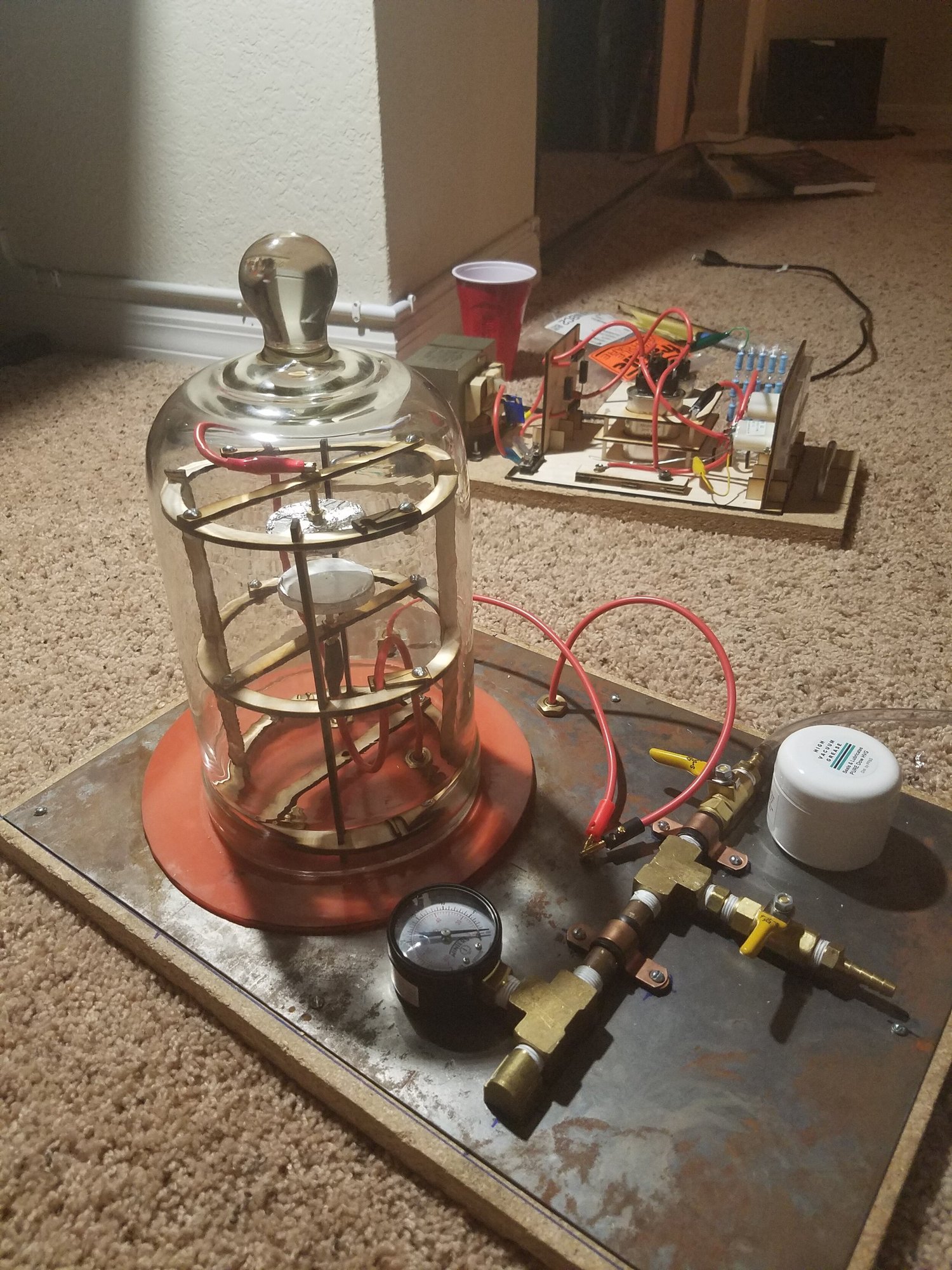
A wooden scaffold held two electrodes at different heights inside the chamber. I later regarded the wood as a likely source of moisture and other gases released under vacuum. The discharge I produced between the electrodes was strongly orange, and contamination became one of the limitations I wanted to address.
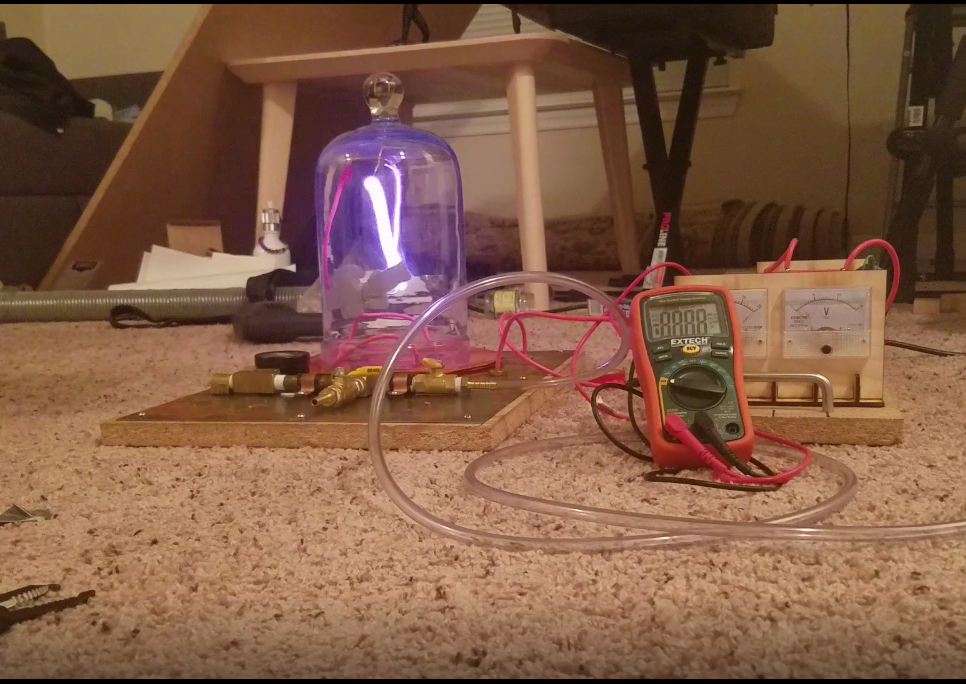
A bright electrical discharge between two wires inside the bell jar. I recall a multimeter failing around this test, although I am not certain of the cause. The photograph also shows the long vinyl-tube connection to the pump, an arrangement I later wanted to reconsider as I learned more about vacuum-system design.
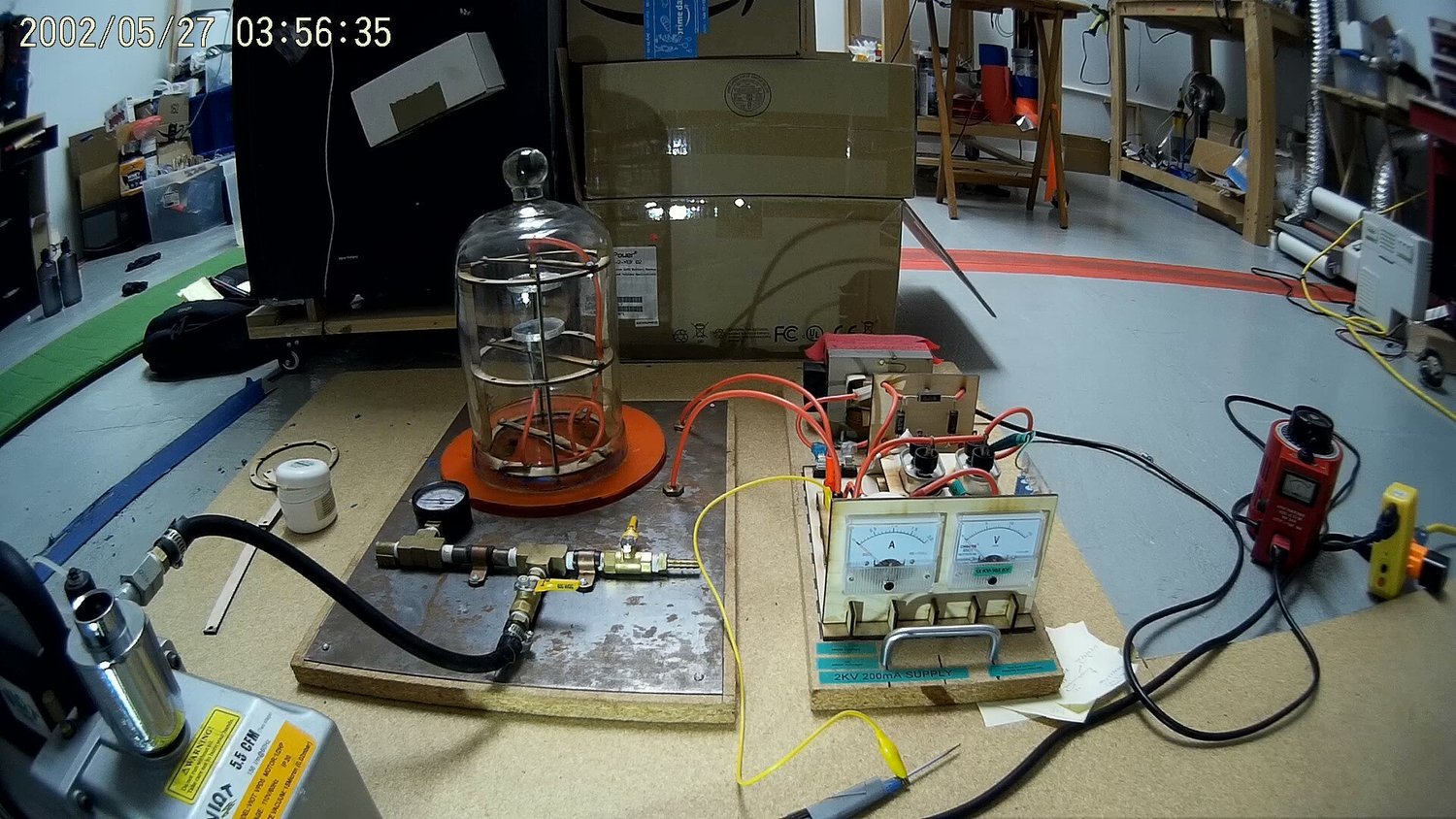
The vacuum chamber and high-voltage supply connected for a plasma experiment. This wider view records how the chamber, pump, electrical connections, and measurement equipment were arranged during the early tests.
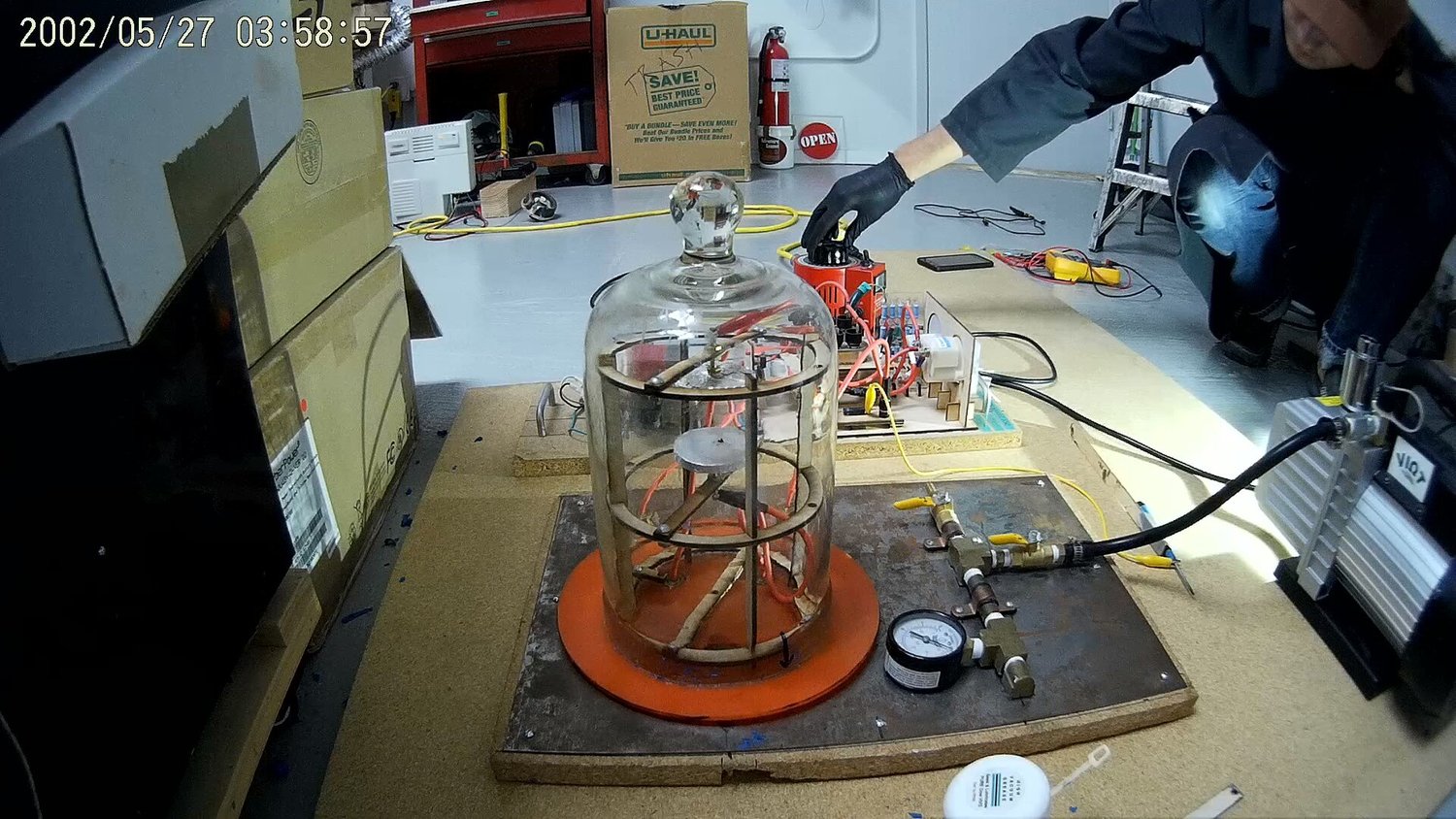
A view from a test in which I varied the input to the high-voltage supply with a Variac, an adjustable transformer. I was observing how the electrical discharge changed as the experimental conditions changed.
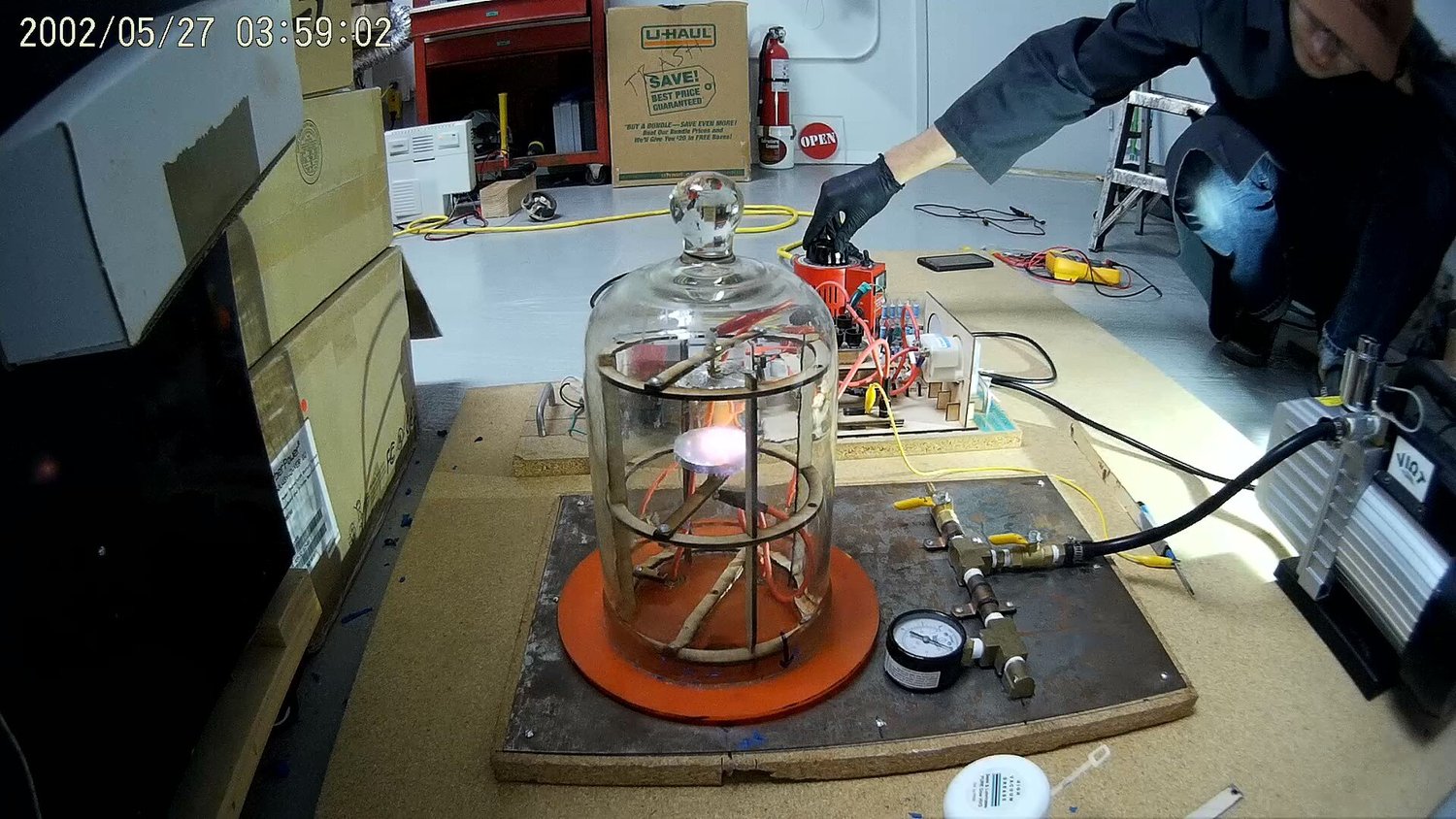
The visible glow of plasma forming inside the bell jar. These experiments were an introduction to creating and observing electrical discharges in a reduced-pressure environment.
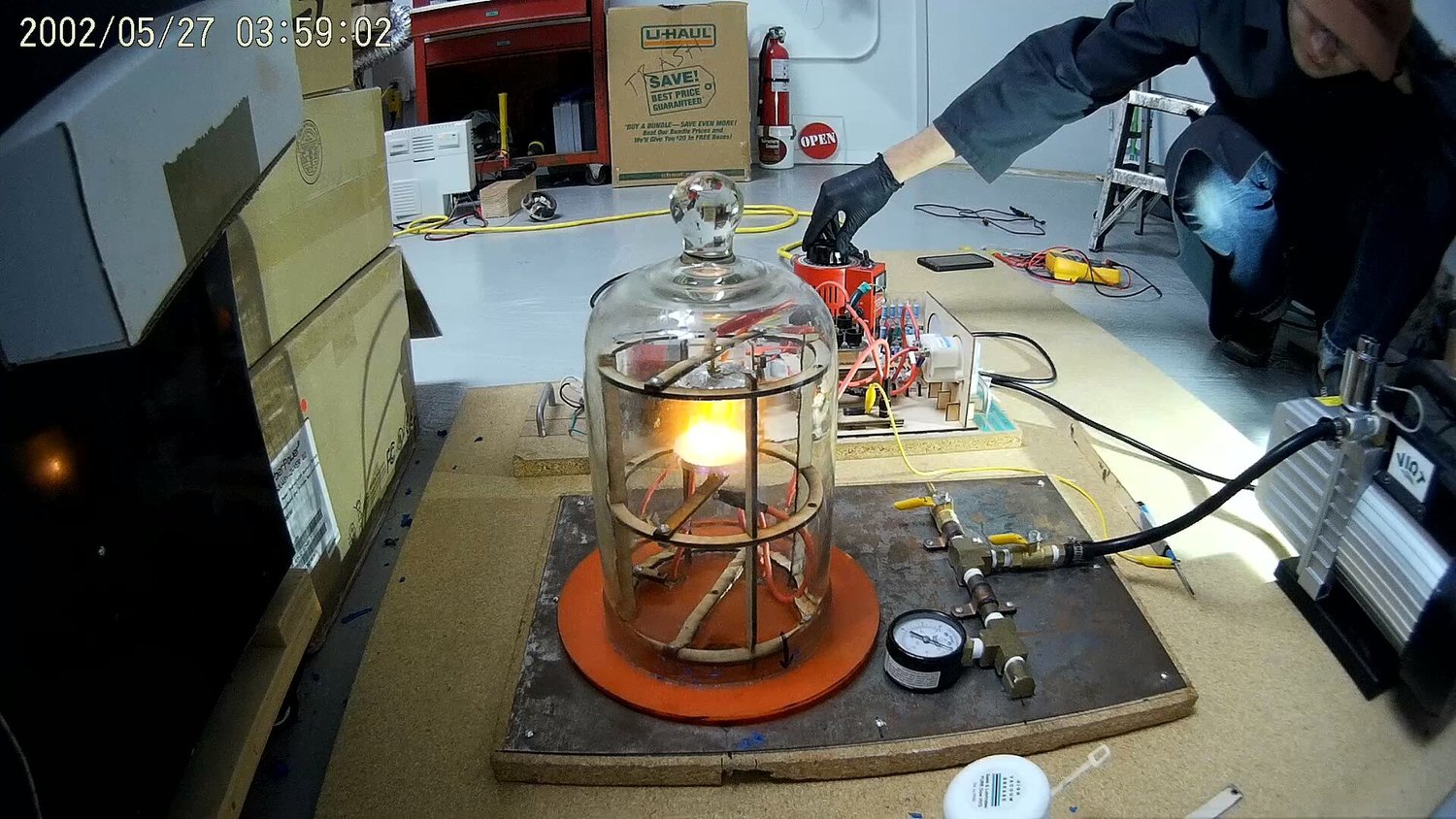
Another view of the glowing discharge inside the bell jar. The images document the early plasma tests and the chamber I used while learning about vacuum equipment, electrode arrangements, and contamination.
Chamber base and connections
Photos 290, 292
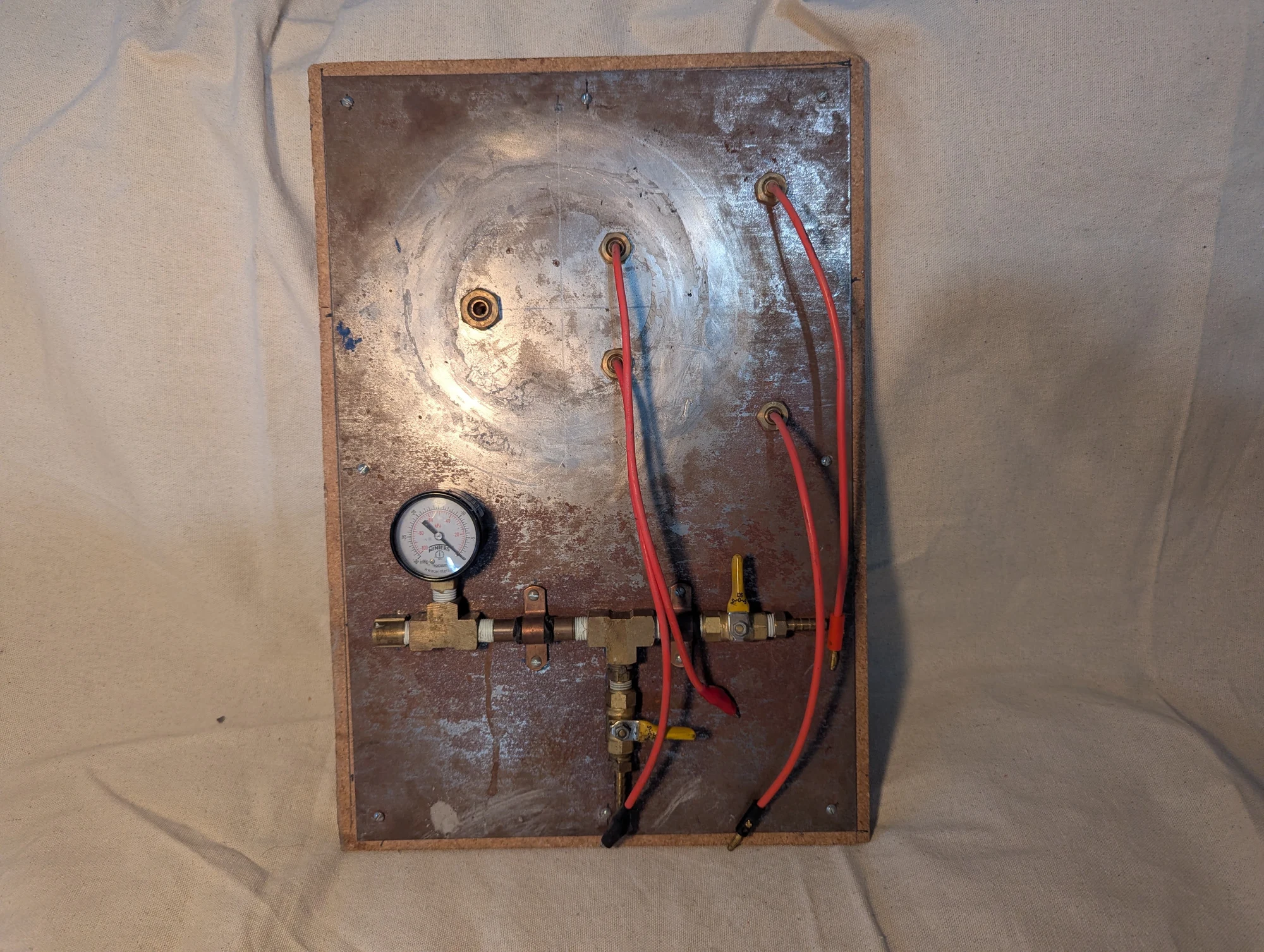
An early vacuum-chamber assembly with electrical feed-throughs and gas ports, built for plasma experiments. Threaded pipe fittings, silicone tubing, and wood parts made achieving a good vacuum difficult: some materials released gas under vacuum. I did produce a plasma. A large bell jar covered the assembly during use, but it is not shown here.
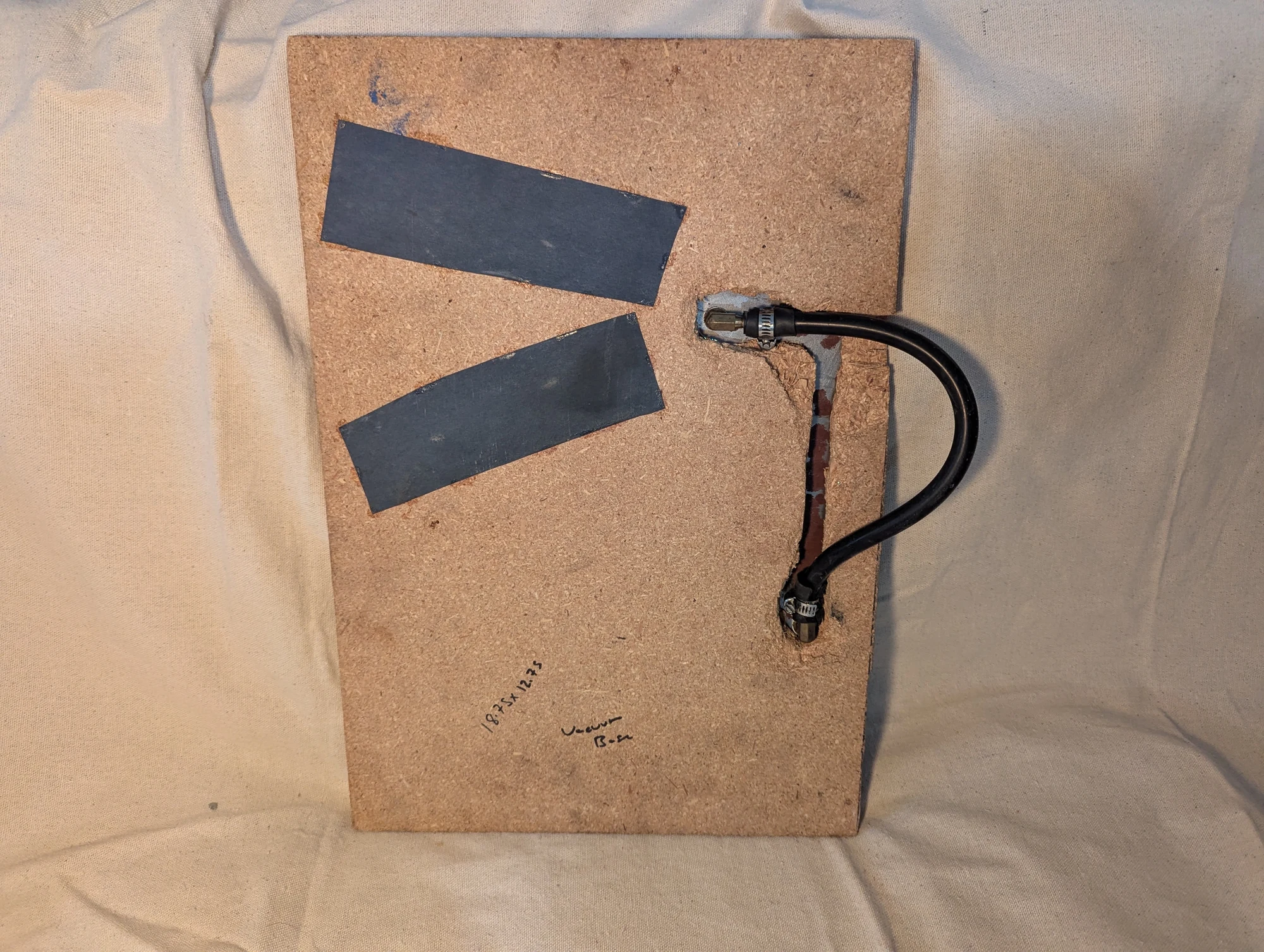
The rear of the early vacuum-chamber assembly, showing the supporting base and plumbing. This was part of the setup I used for plasma experiments beneath a large bell jar.