Personal projects / Materials & heat
Electric-arc ruby furnace
An early crystal-growth furnace with a split insulating enclosure, feedstock reservoir, and rotating lift.
Open the numbered review →Furnace and heating experiments
Photos 135–143
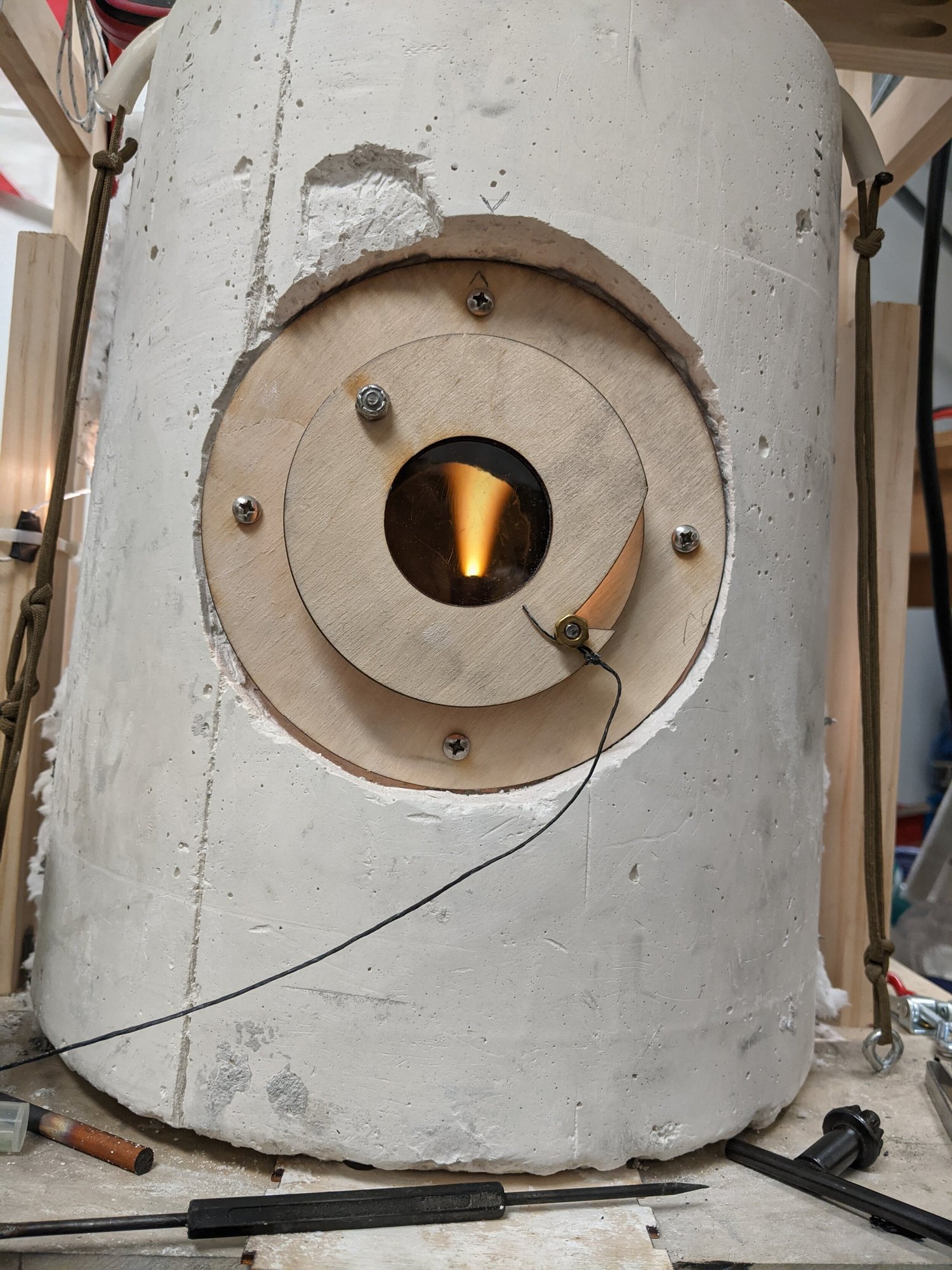
An attempt to explore a flame-fusion-style process using an electric arc as the heat source. I made a split enclosure from plaster mixed with vermiculite and added ceramic-wool insulation inside. The design included a feed opening above the chamber and a small front viewing port.
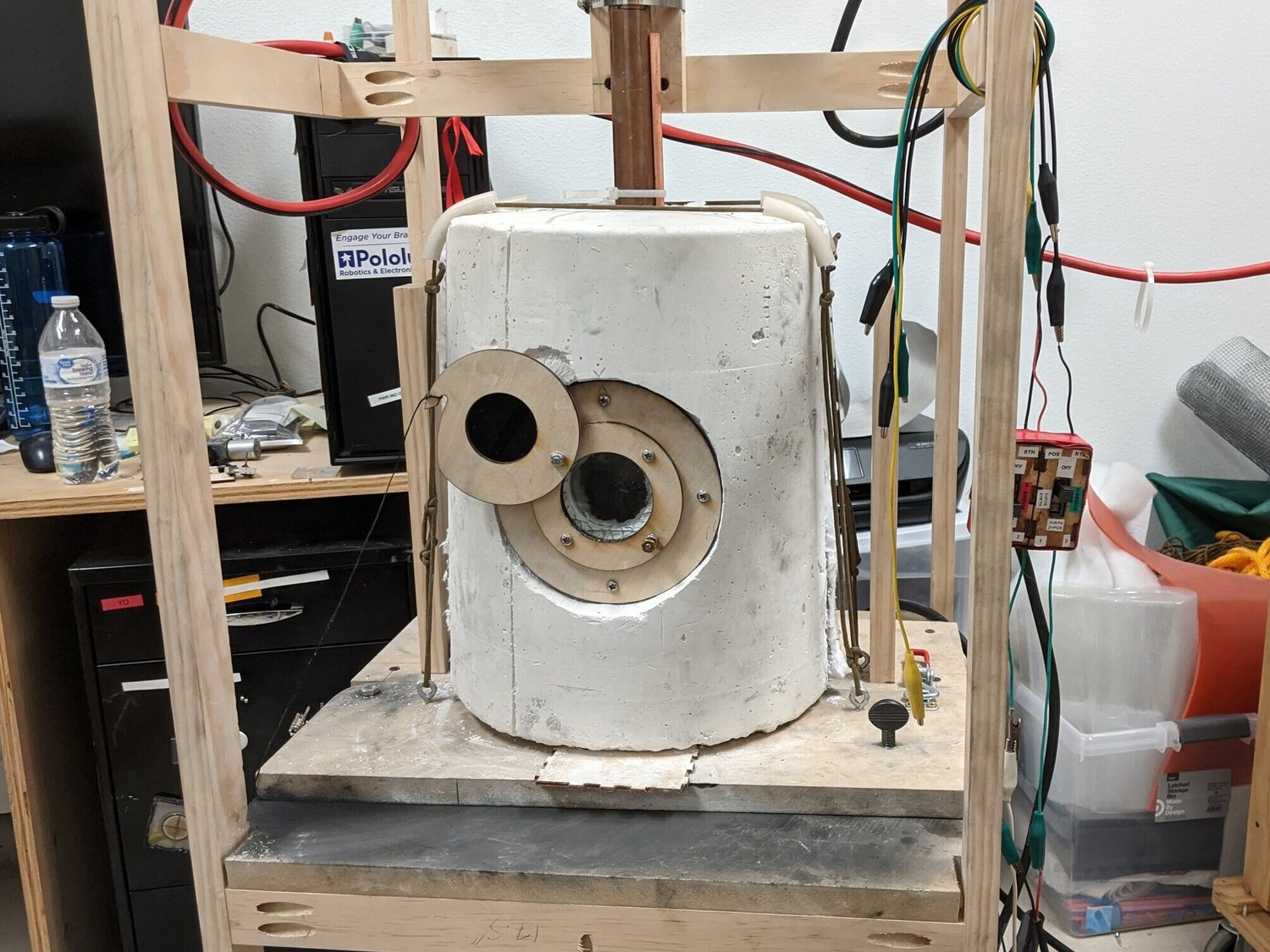
A closer view of the small opening used to observe the furnace interior. I fitted welding filter glass in front of it to reduce the brightness of the view during the arc experiments.
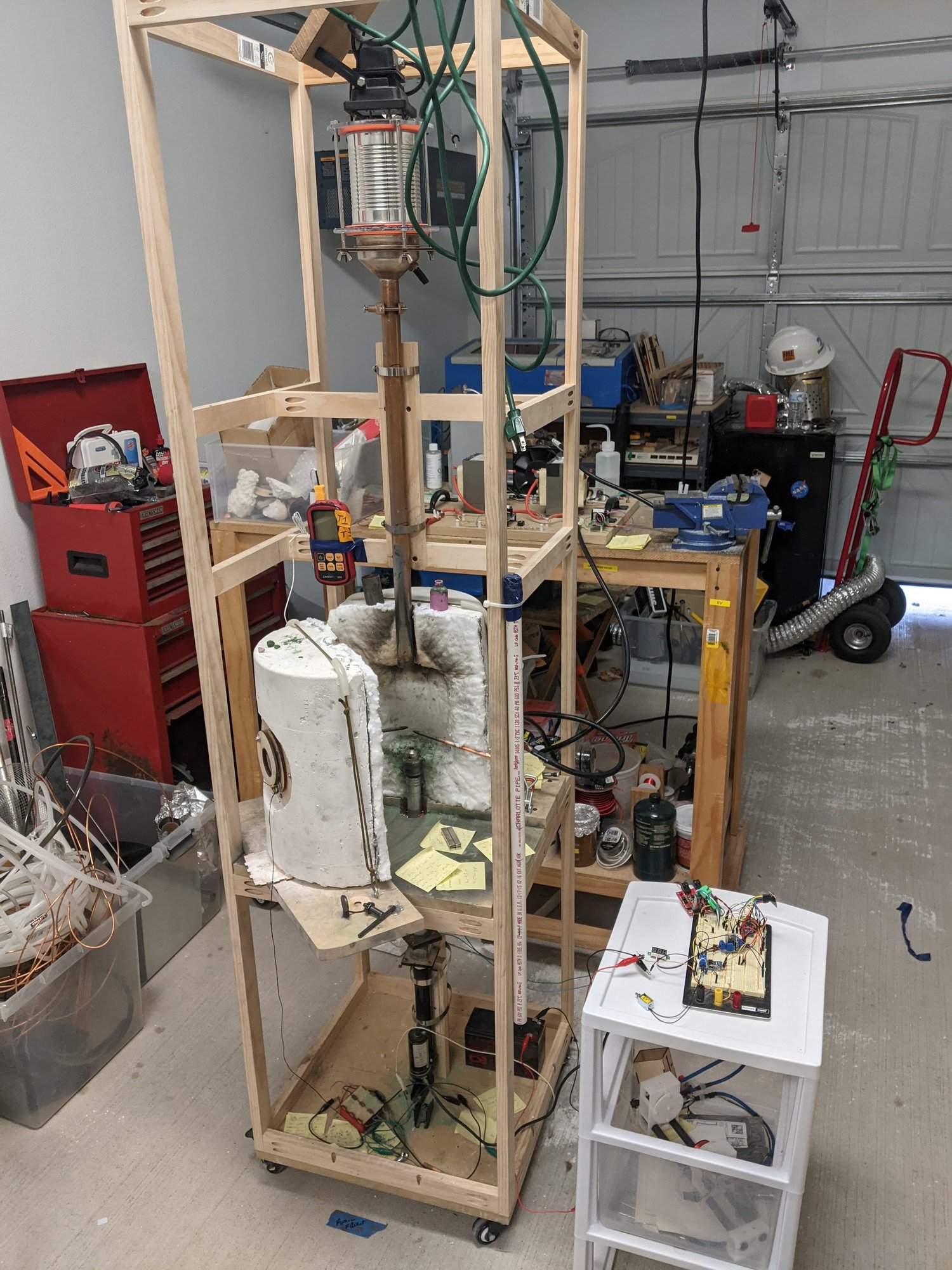
The complete furnace assembly with its enclosure opened for access. Above it, a reservoir and long copper tube formed an experimental powder feeder. I was exploring how to introduce small amounts of alumina into the heated region during a crystal-growth trial.
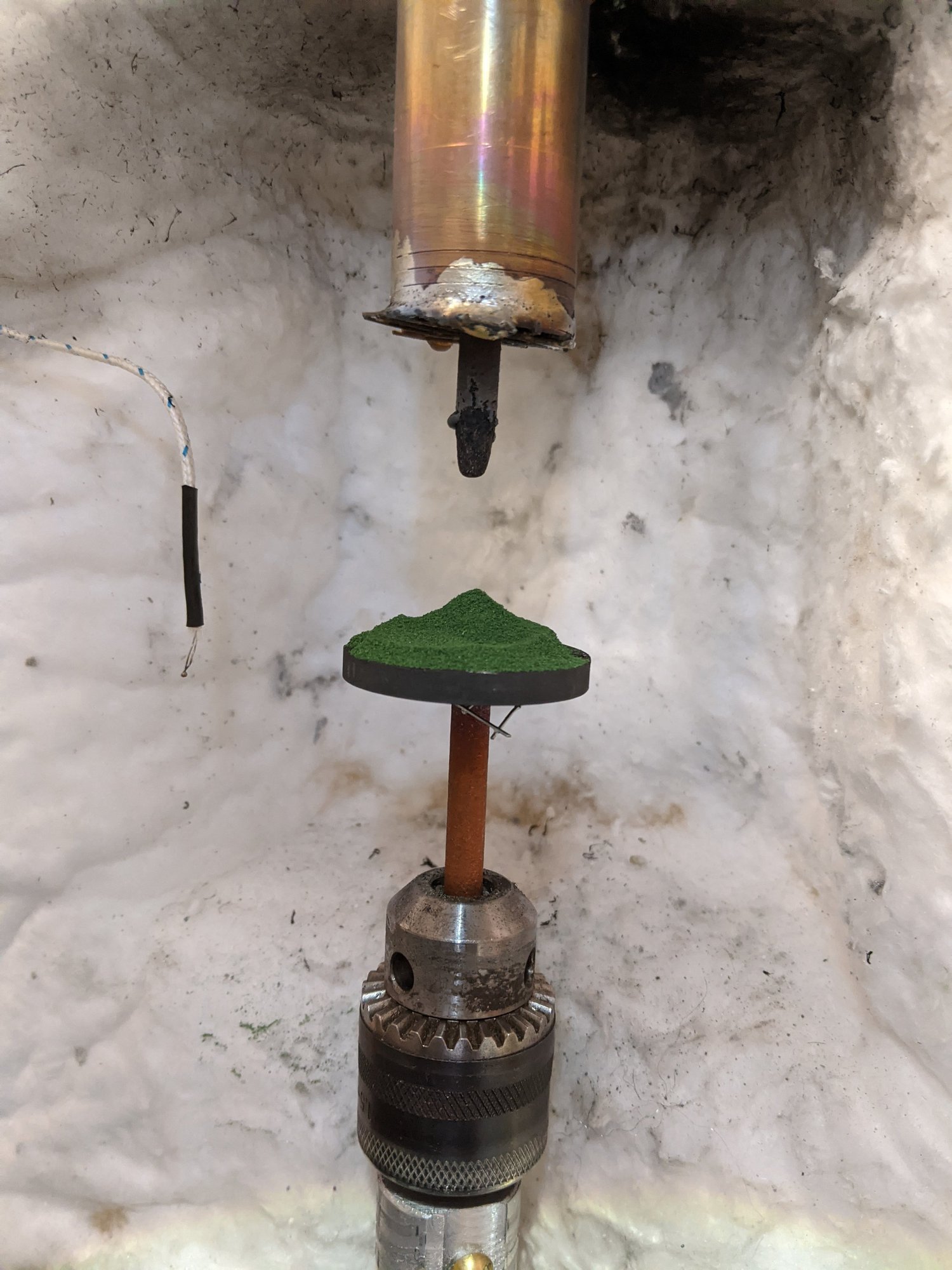
One arc-heating arrangement positioned an electrode above a graphite platform holding the oxide feedstock. A collet—a small clamping holder—made the head replaceable. The supporting mechanism could rotate and move vertically, letting me explore different sample positions during the furnace experiments.
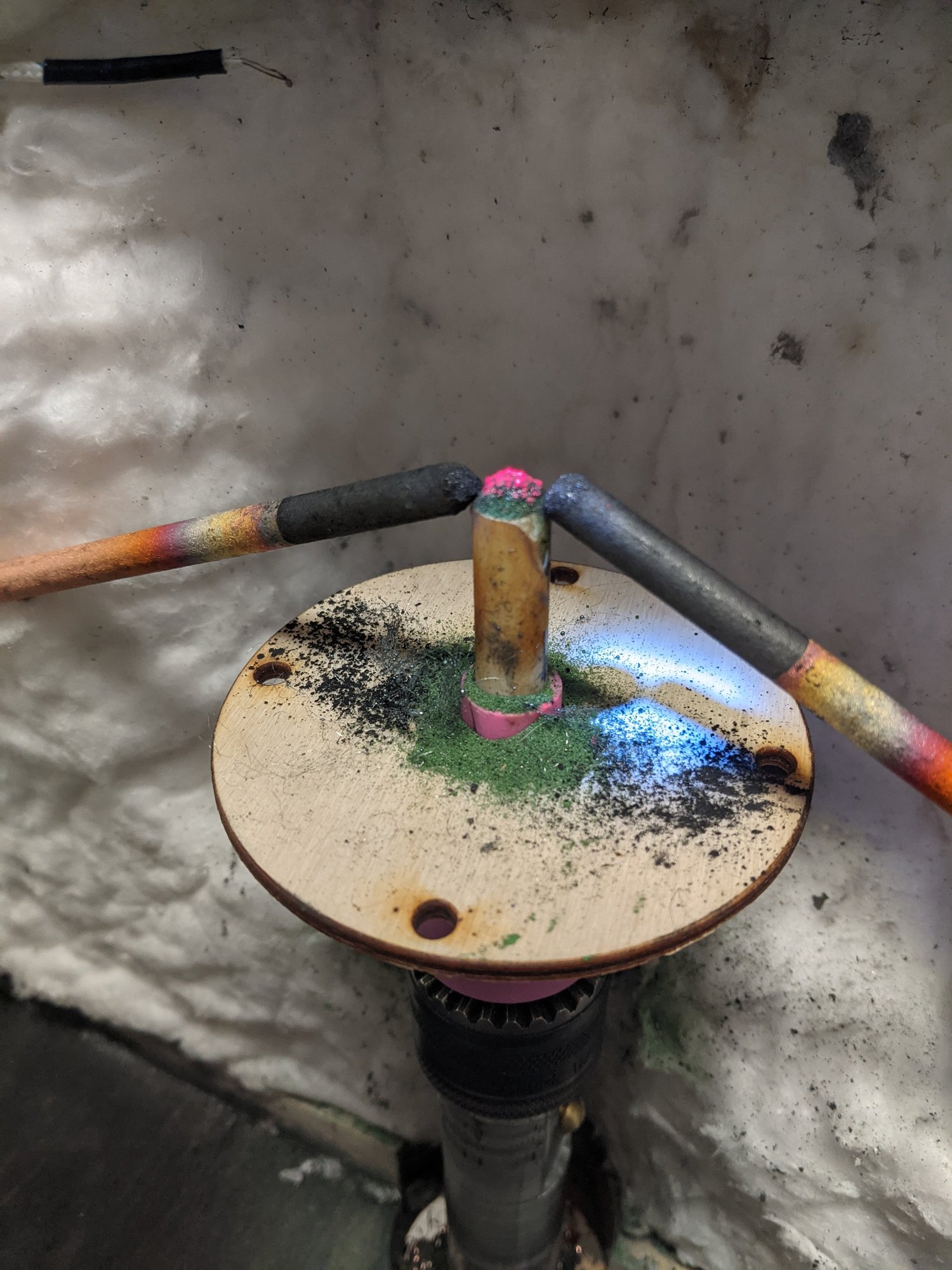
An experiment using an arc between two carbon electrodes as the heat source for a sapphire-growth attempt. This was one of several heating arrangements I explored while developing the furnace.
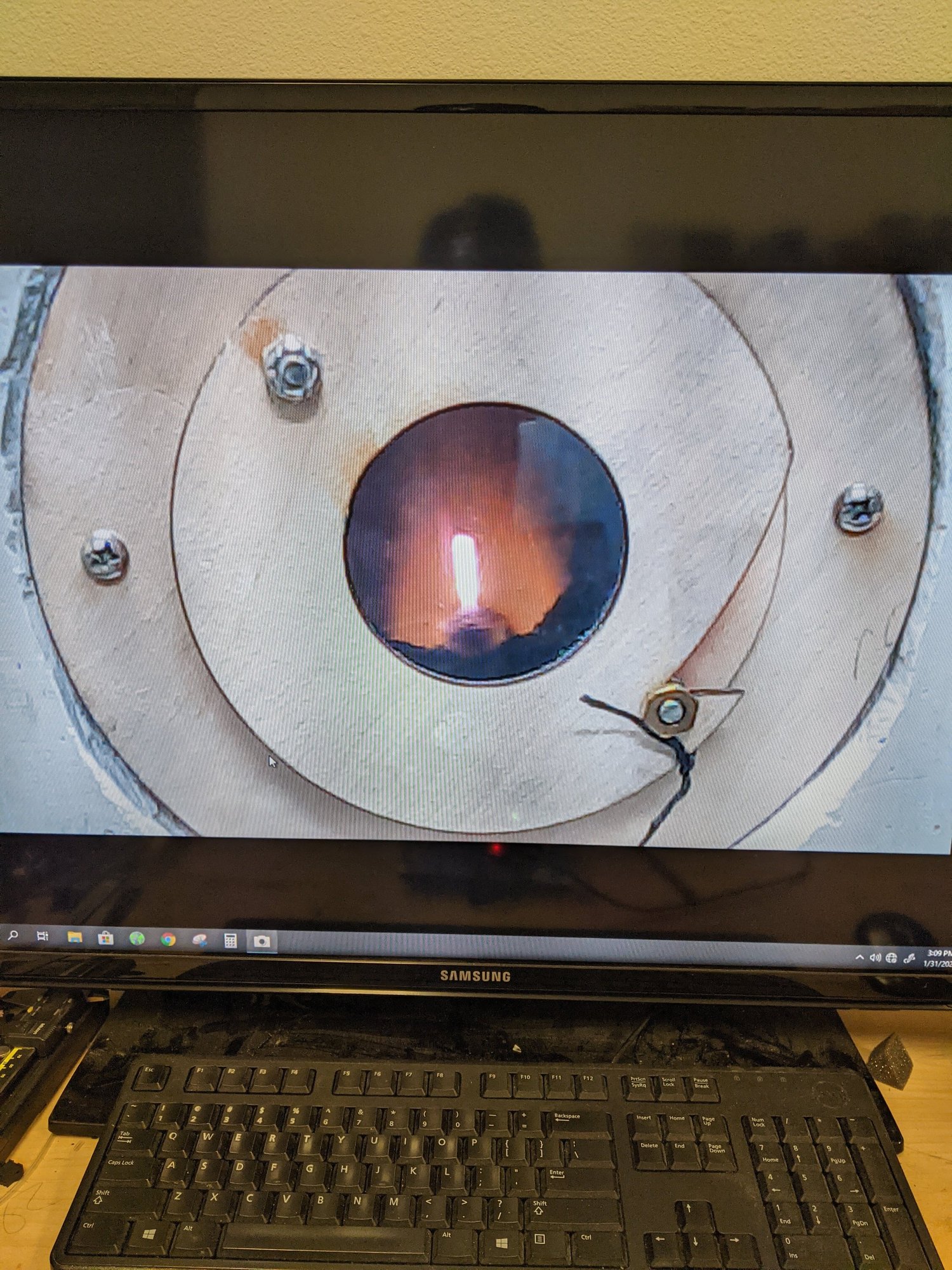
A video camera aimed at the front of the furnace let me monitor the experiment remotely. The bright central target is a ruby seed crystal attached to a porcelain rod, intended to provide a starting point for growth.
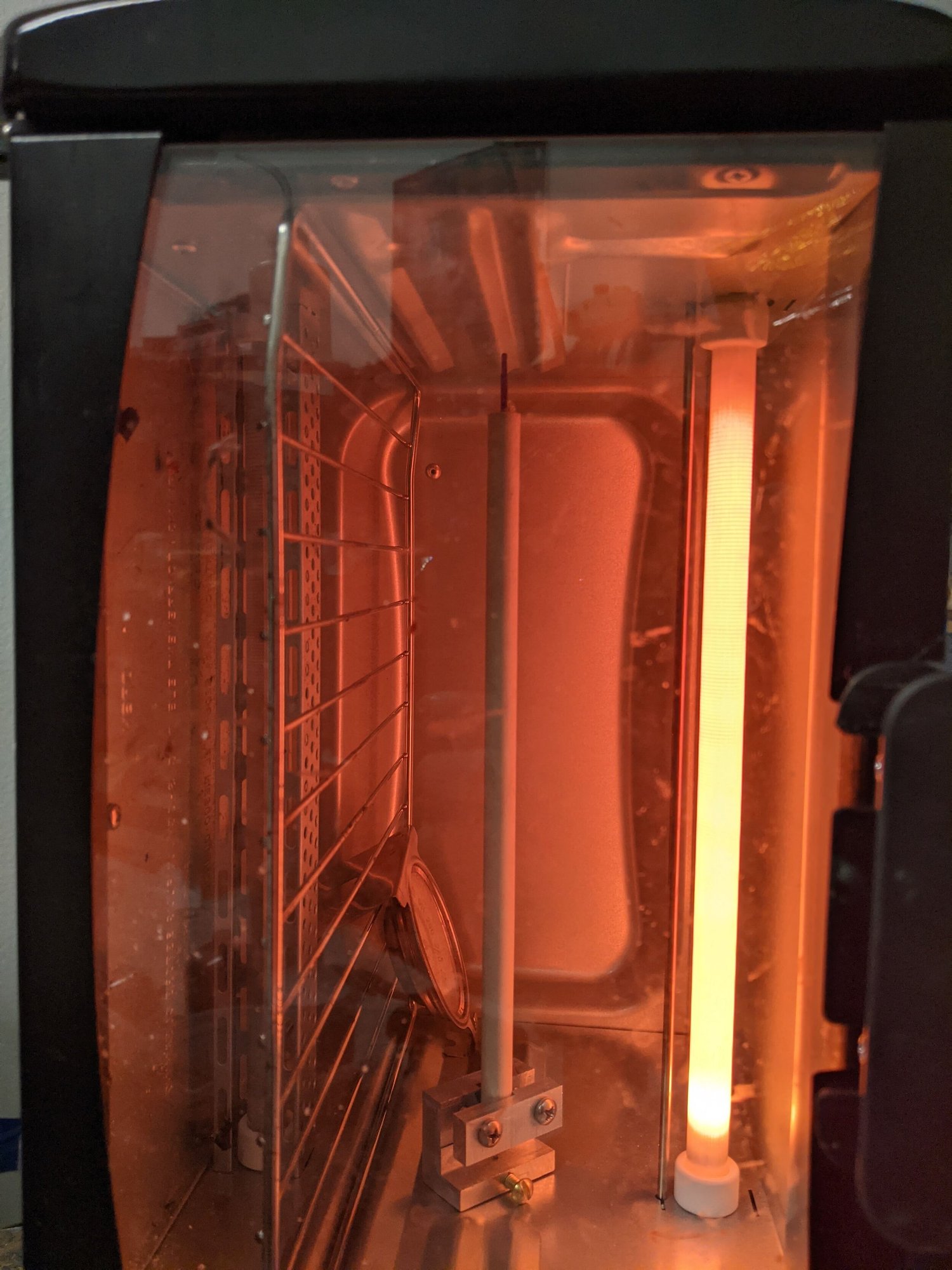
The ruby seed crystal mounted on its ceramic support rod. This assembly was intended to hold the seed in the heated region as additional material was introduced during a growth experiment.
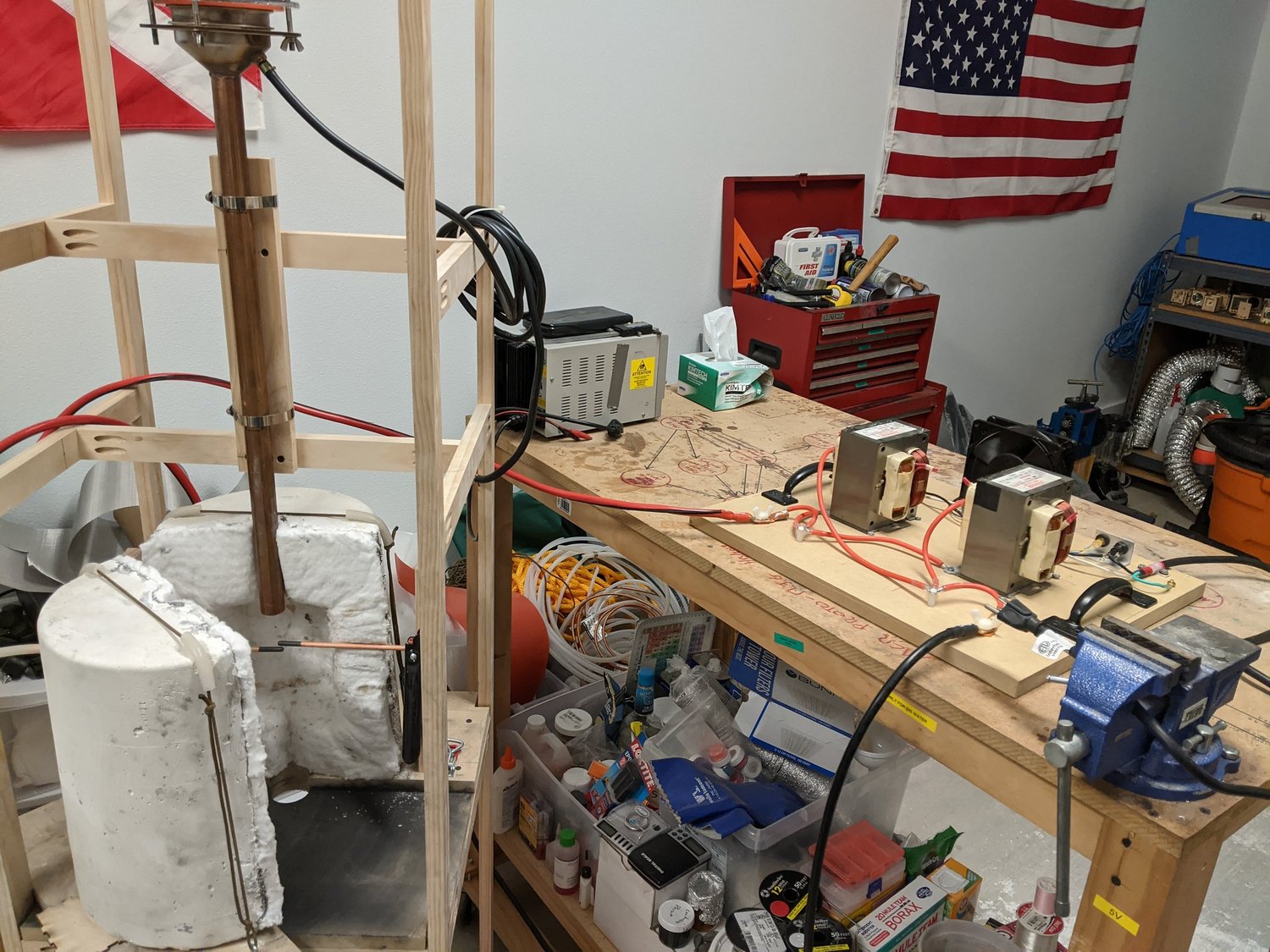
A construction-stage view of the furnace and supporting equipment. The two microwave-oven transformers on the right were part of the experimental arc power source. The photograph records the assembly before the later enclosure and monitoring arrangements were complete.
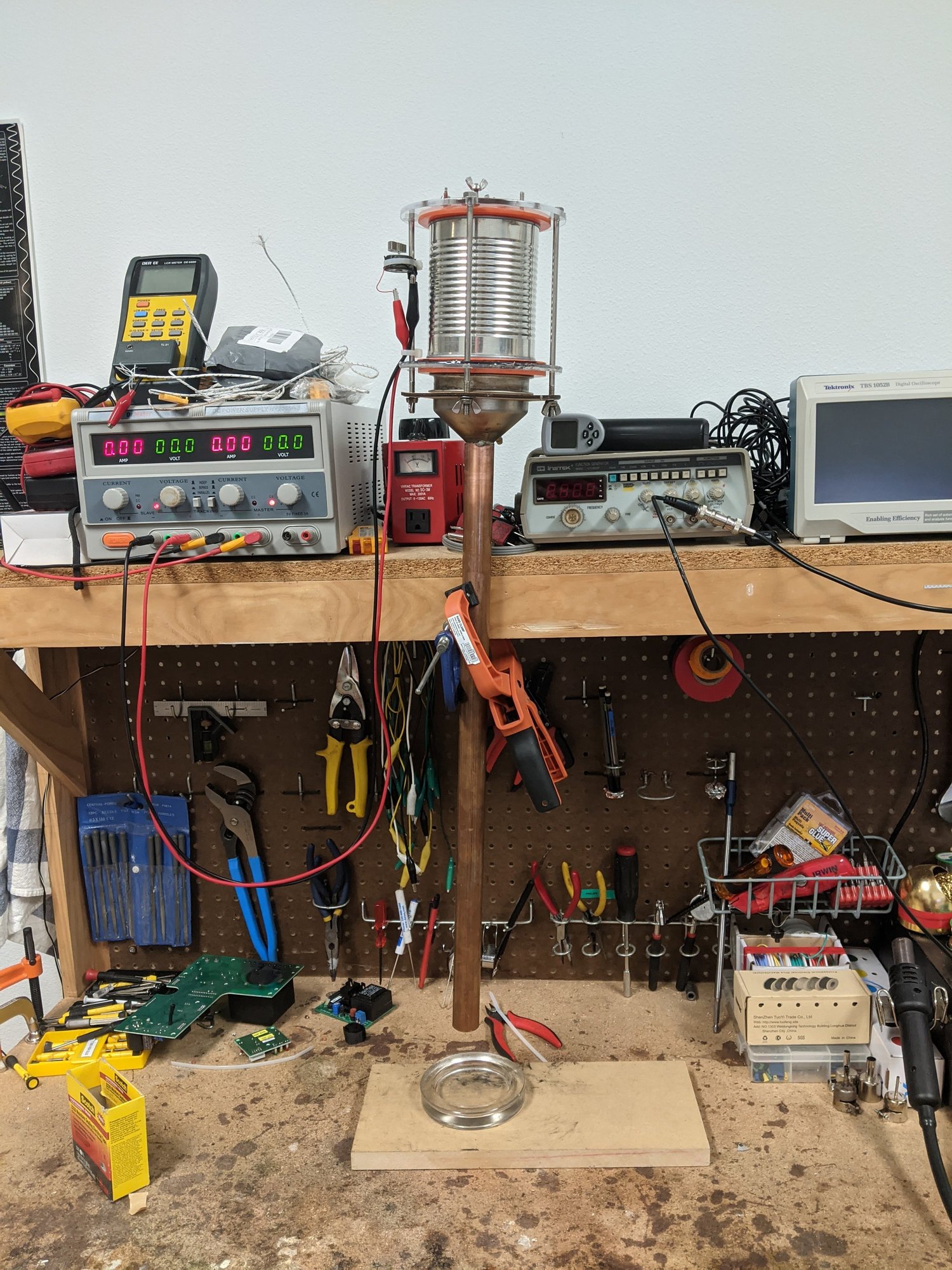
A test of the reservoir, fine mesh, and feed tube intended to deliver small quantities of alumina to the furnace. Developing a manageable powder feed was a separate part of the project alongside the heating and sample-positioning systems.
See it in motion
Frame and enclosure construction
Photos 144–148
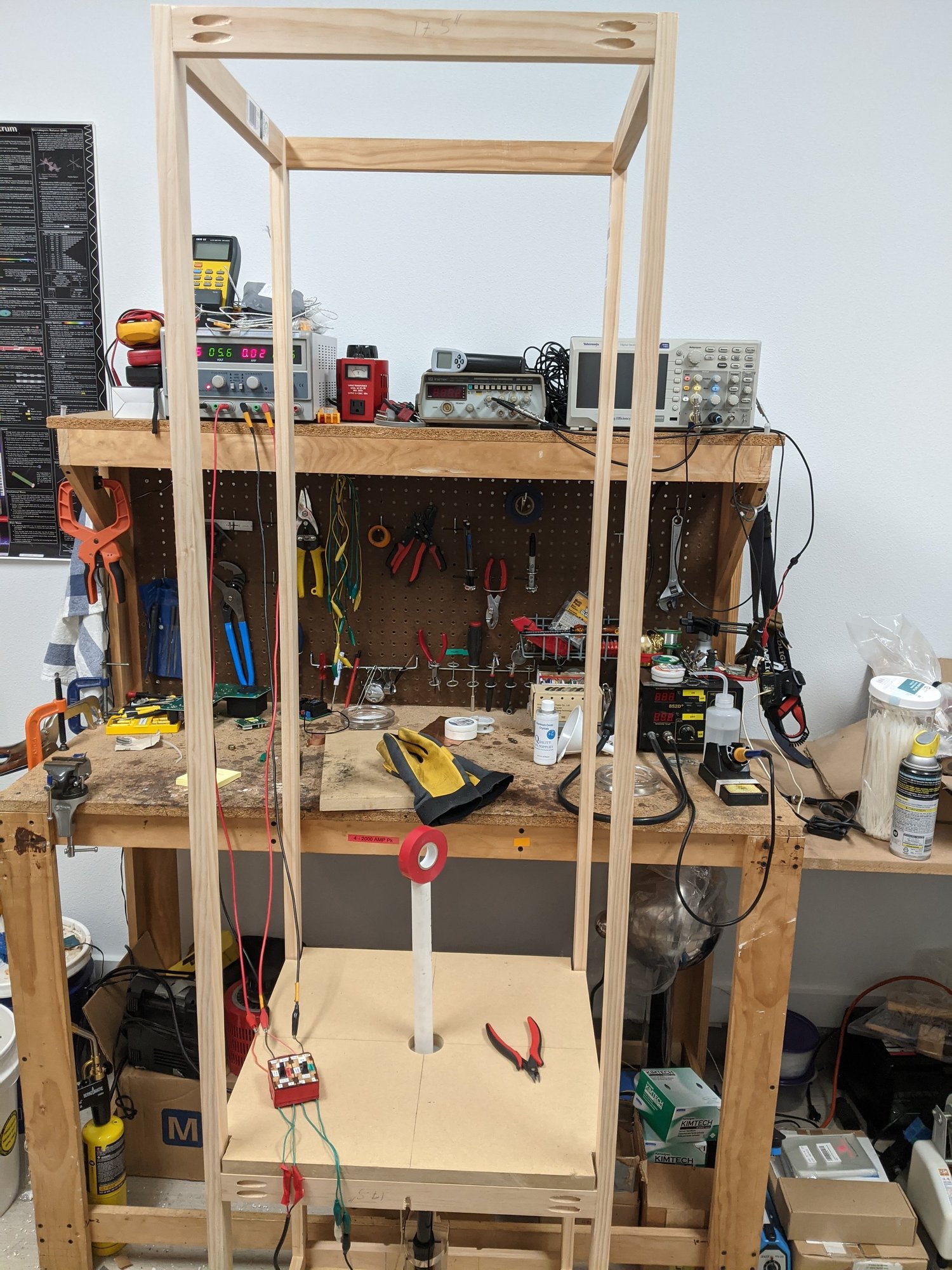
The wooden frame under construction. It provided a structure for mounting the chamber and the other mechanical parts of the furnace experiment.
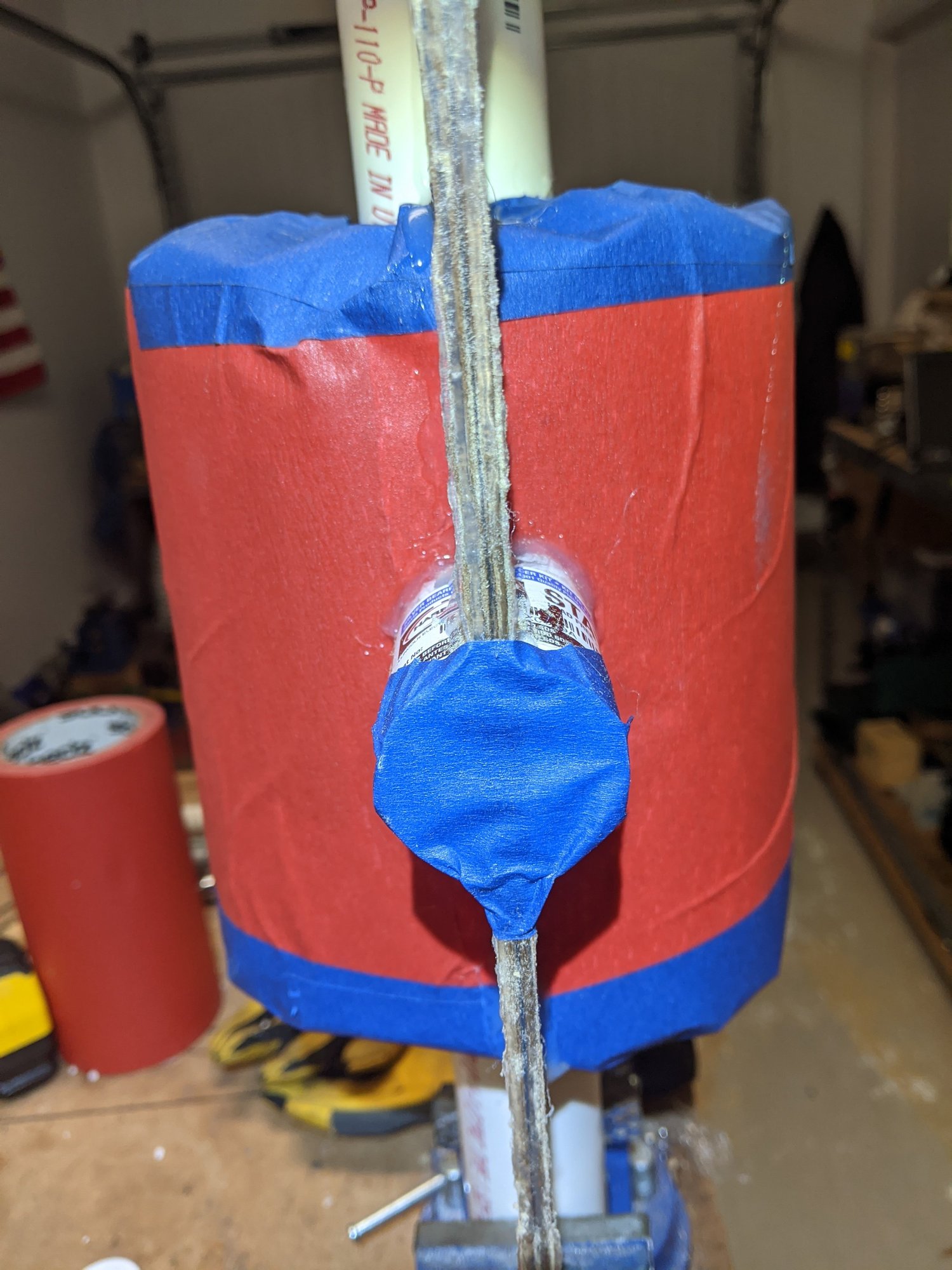
The form used to define the inside of the plaster furnace enclosure. I added wire mesh as reinforcement while developing the mold and casting arrangement for the two chamber halves.
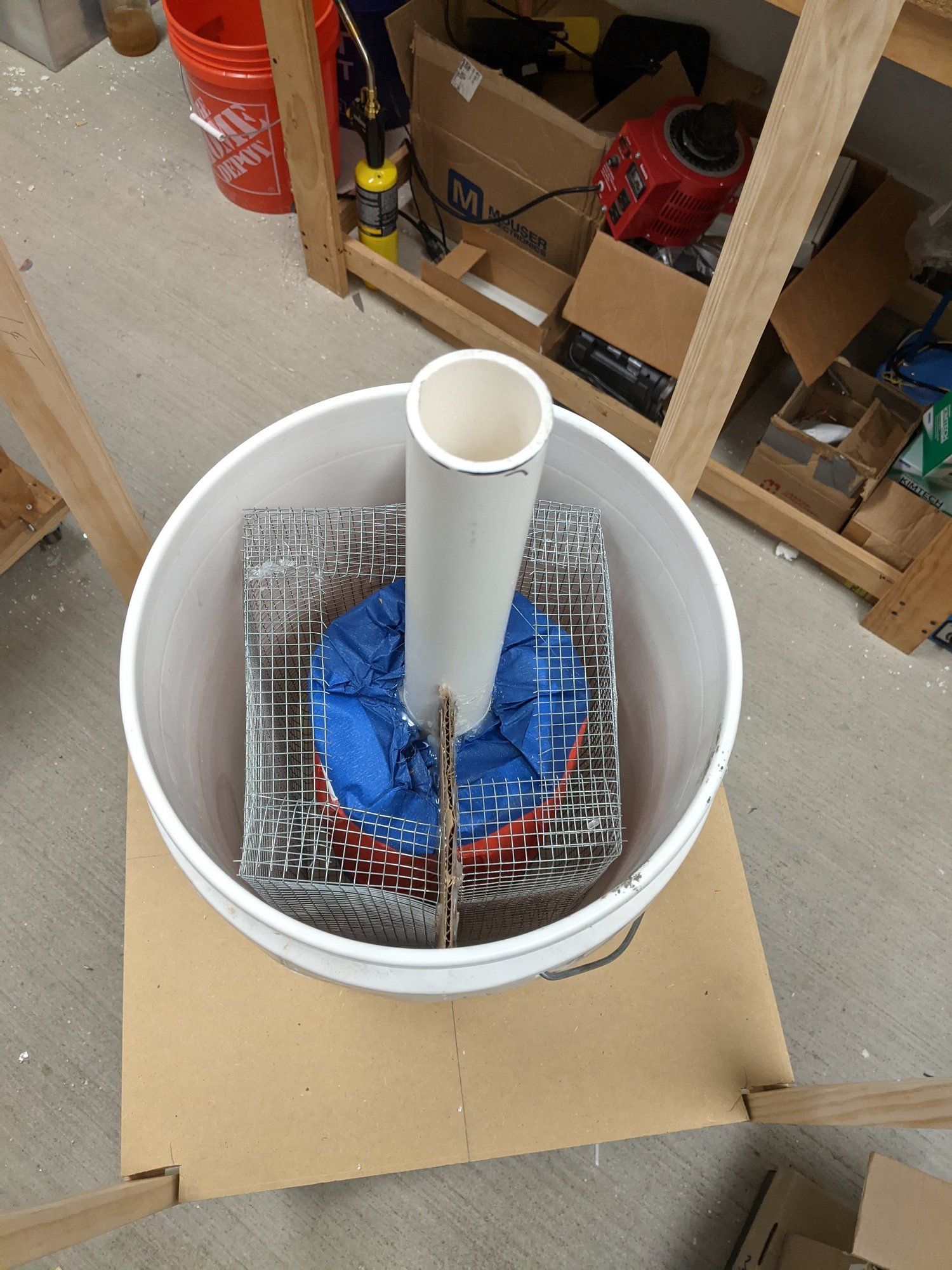
The enclosure mold inside a bucket used as the outer casting form. The inner form defined the chamber cavity, while the plaster mixture filled the space around it to create the shell.
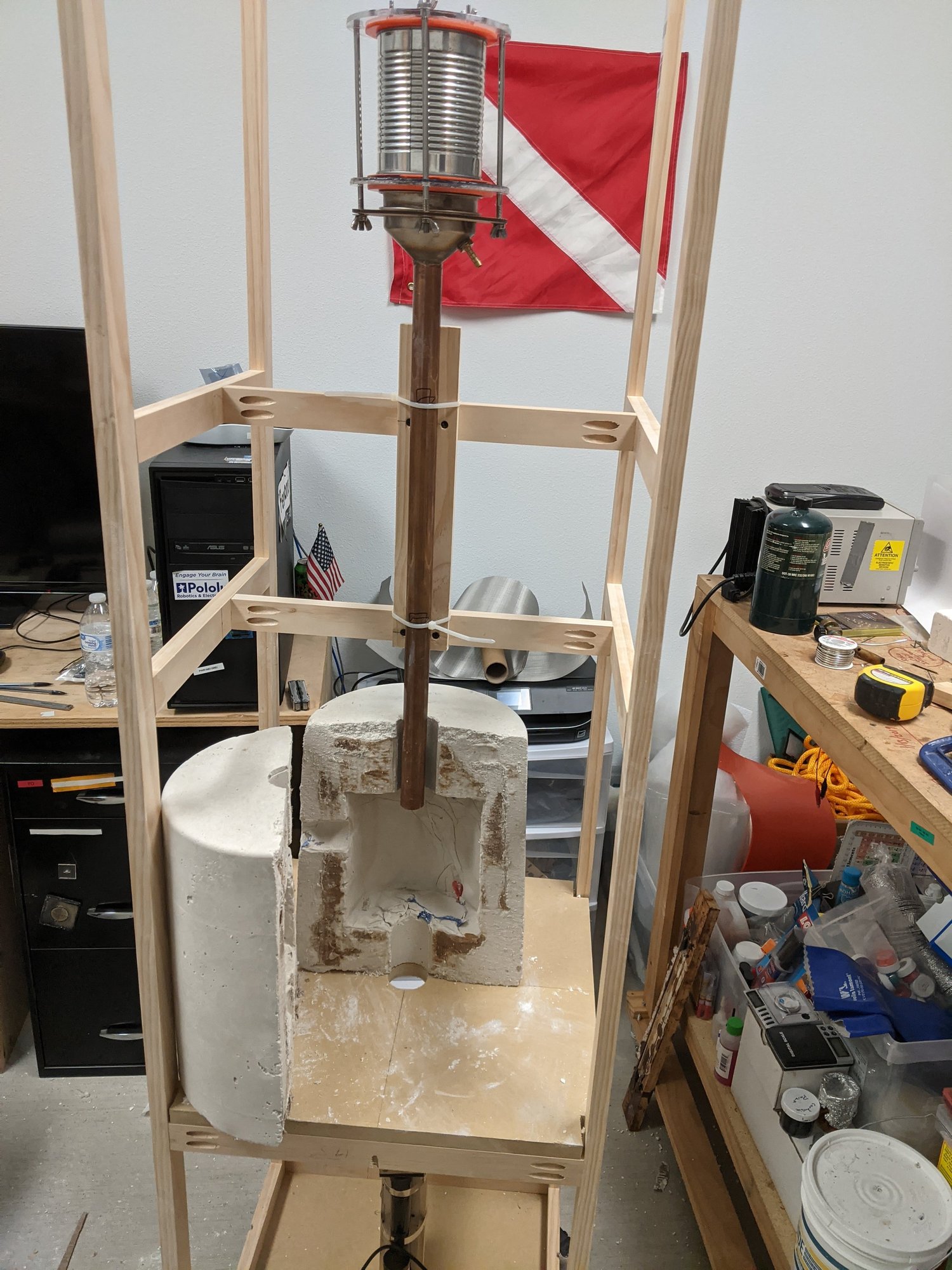
The plaster enclosure after the casting forms were removed. The two halves enclose a central cavity and can be opened to reach the experimental heating and sample-holder components.
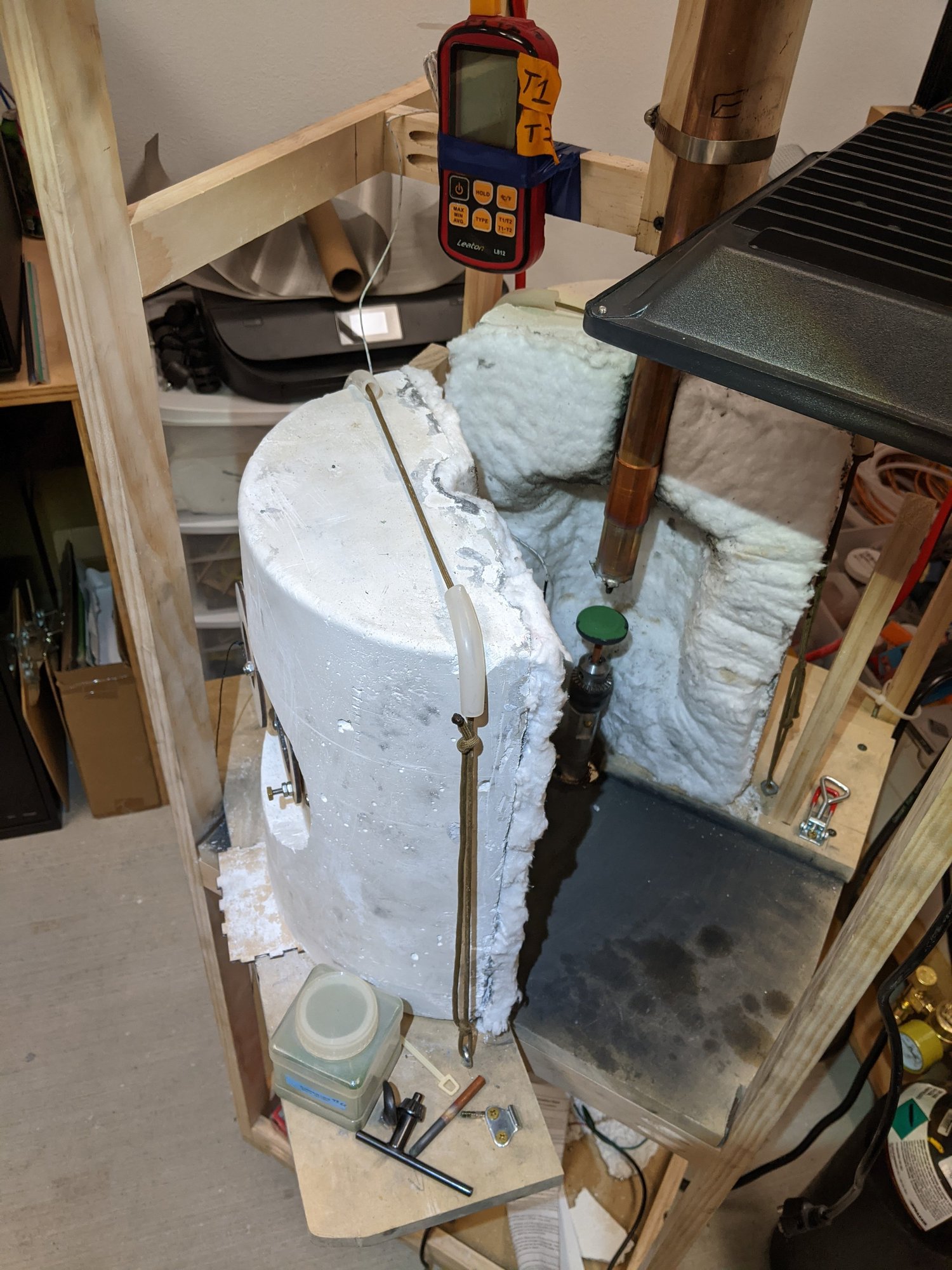
Ceramic wool lining the inside of the two cast chamber halves. This was an additional insulation layer intended to help retain heat around the experimental furnace’s working region.