Contract work / Sensors & electronics
Microwave concrete-curing experiments
A client prototype exploring faster concrete curing through microwave heating, with a trade-off in material strength.
Open the numbered review →Emitter and test enclosure
Photos 207–209
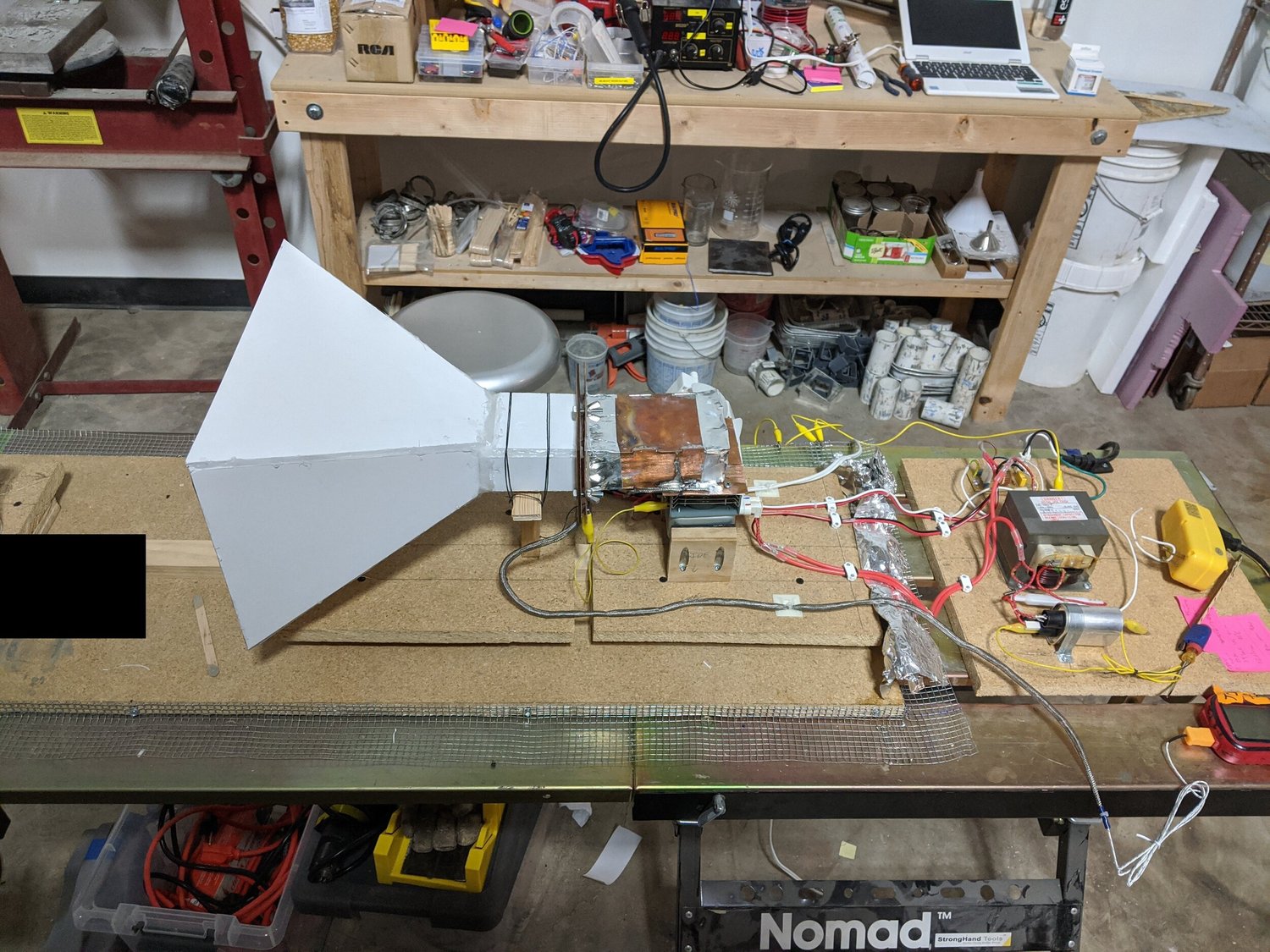
A microwave emitter I built for Three Space Makers, a company exploring concrete 3D printing for houses. The trials investigated whether heating could speed up the material's setting. I recall much shorter setting times, but the rapidly heated samples were also much weaker, making the balance between speed and strength central to the work. One idea was to use the faster-setting material for temporary printing supports. The project ended when the company ran out of funding.
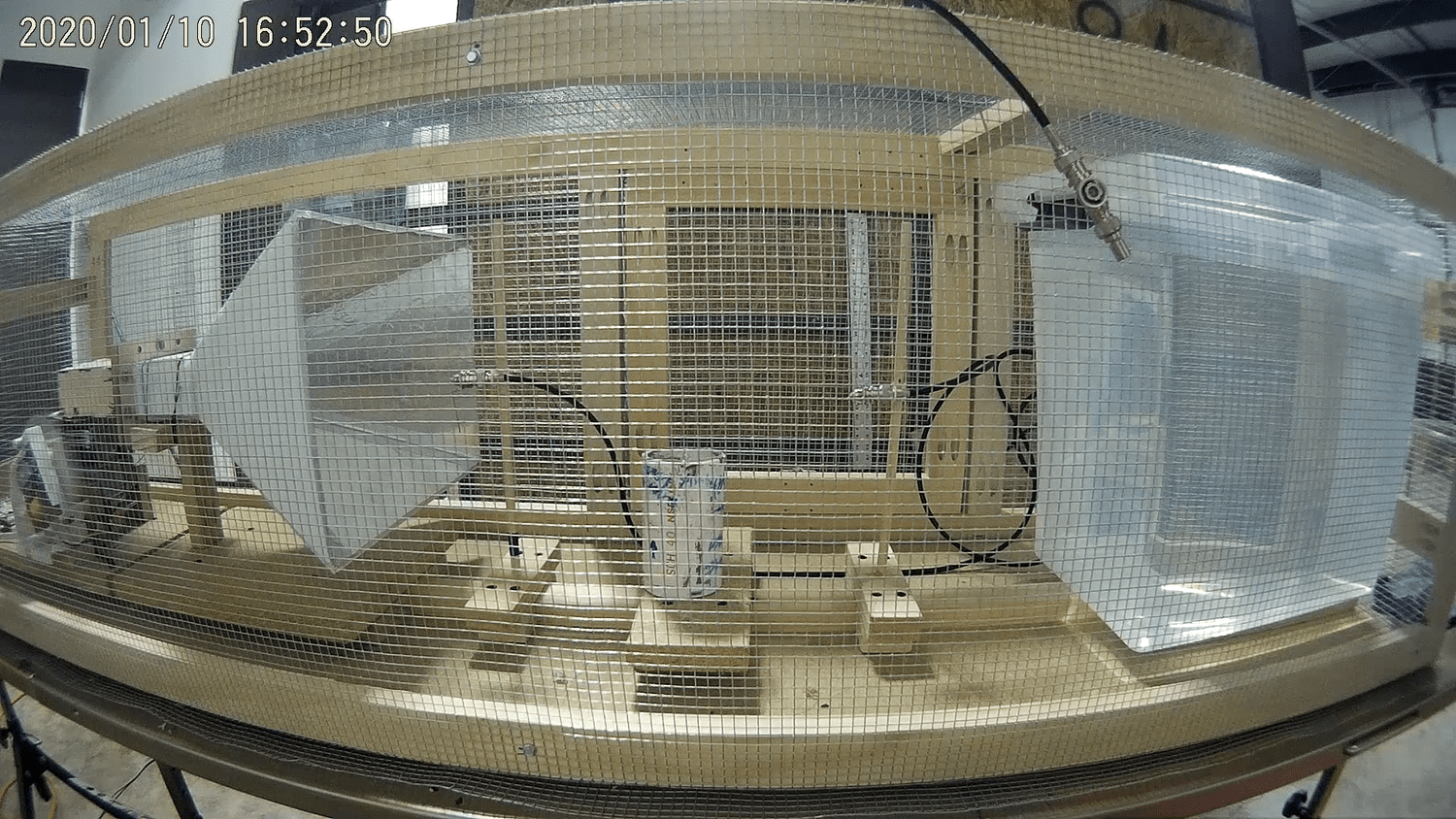
A metal-mesh enclosure intended to contain microwave energy during the concrete-heating tests. An adjustable fixture changed the sample's distance from the microwave horn. The water container was intended to absorb energy and reduce reflections back toward the emitter. An antenna connected to radio-frequency measurement equipment monitored the received signal in the enclosure.
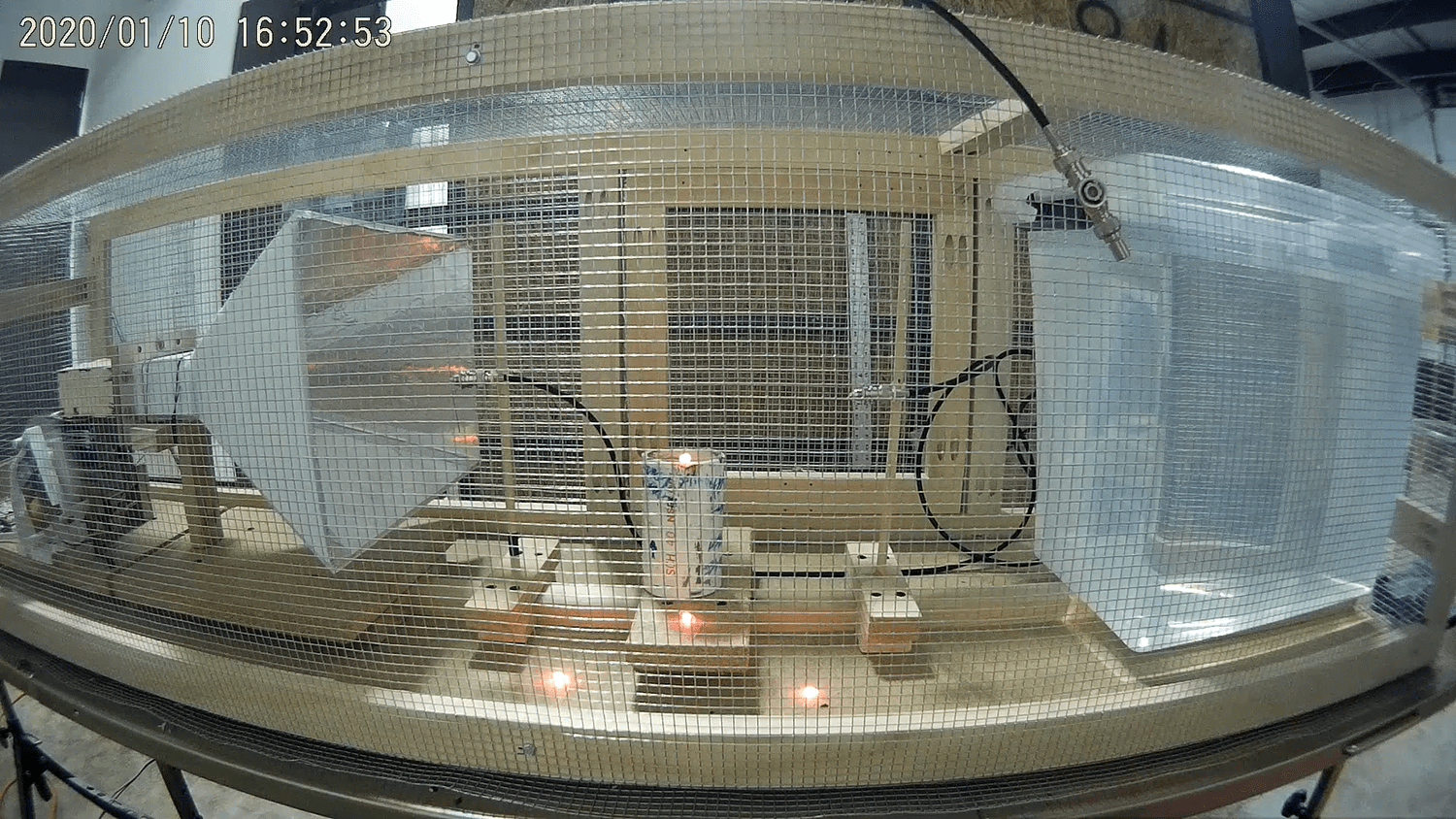
Neon lamps placed inside the test enclosure glow during microwave operation, even though no power wires are connected to them. I used them as a striking visual indication that energy was present in the chamber, alongside the electronic measurements used for the project.
Controls and RF measurements
Photos 210–213
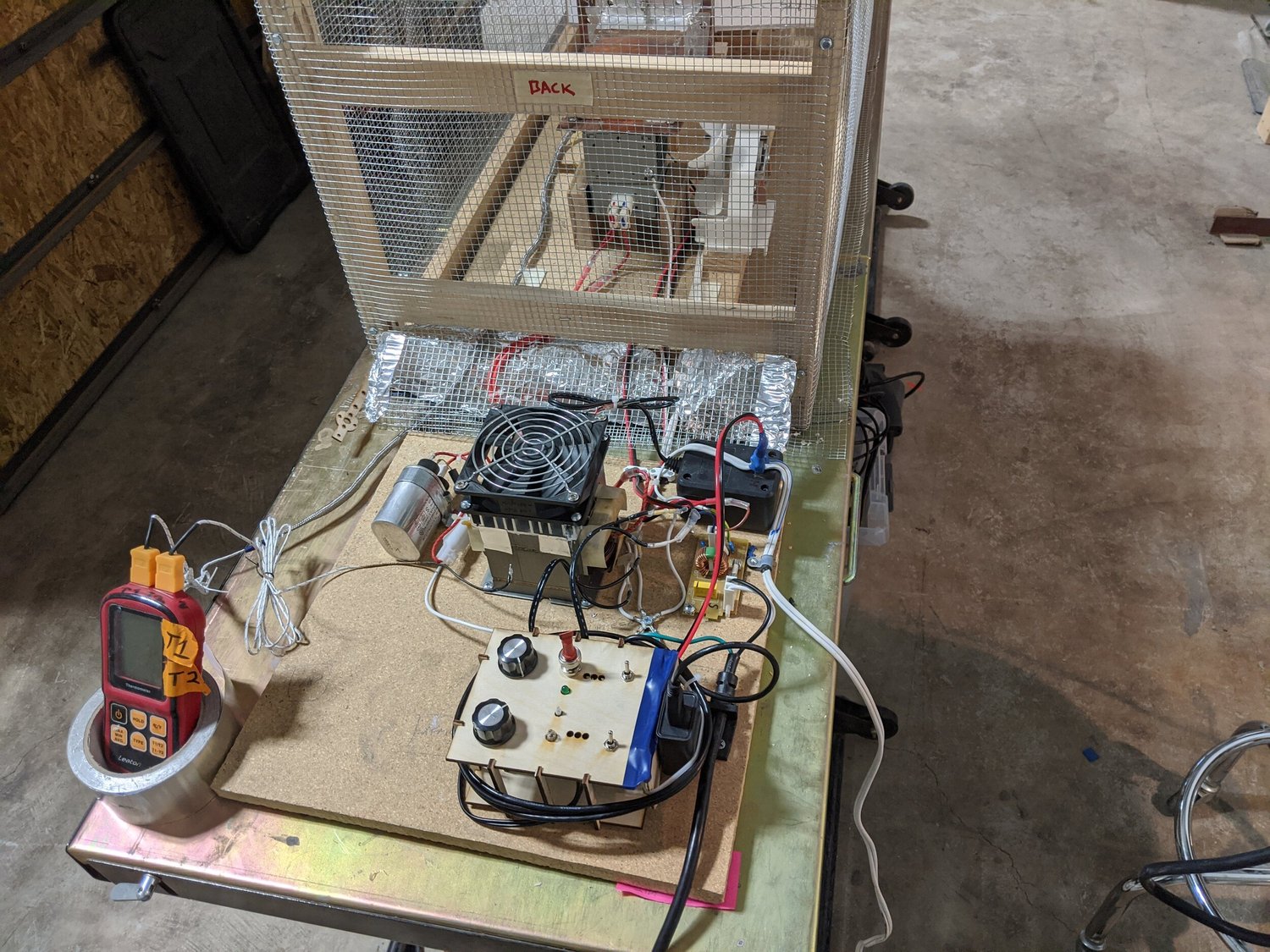
The control box for the microwave experiment. It set the duration of operation and could also run a pulsed sequence, giving me a way to control the timing of the heating tests.
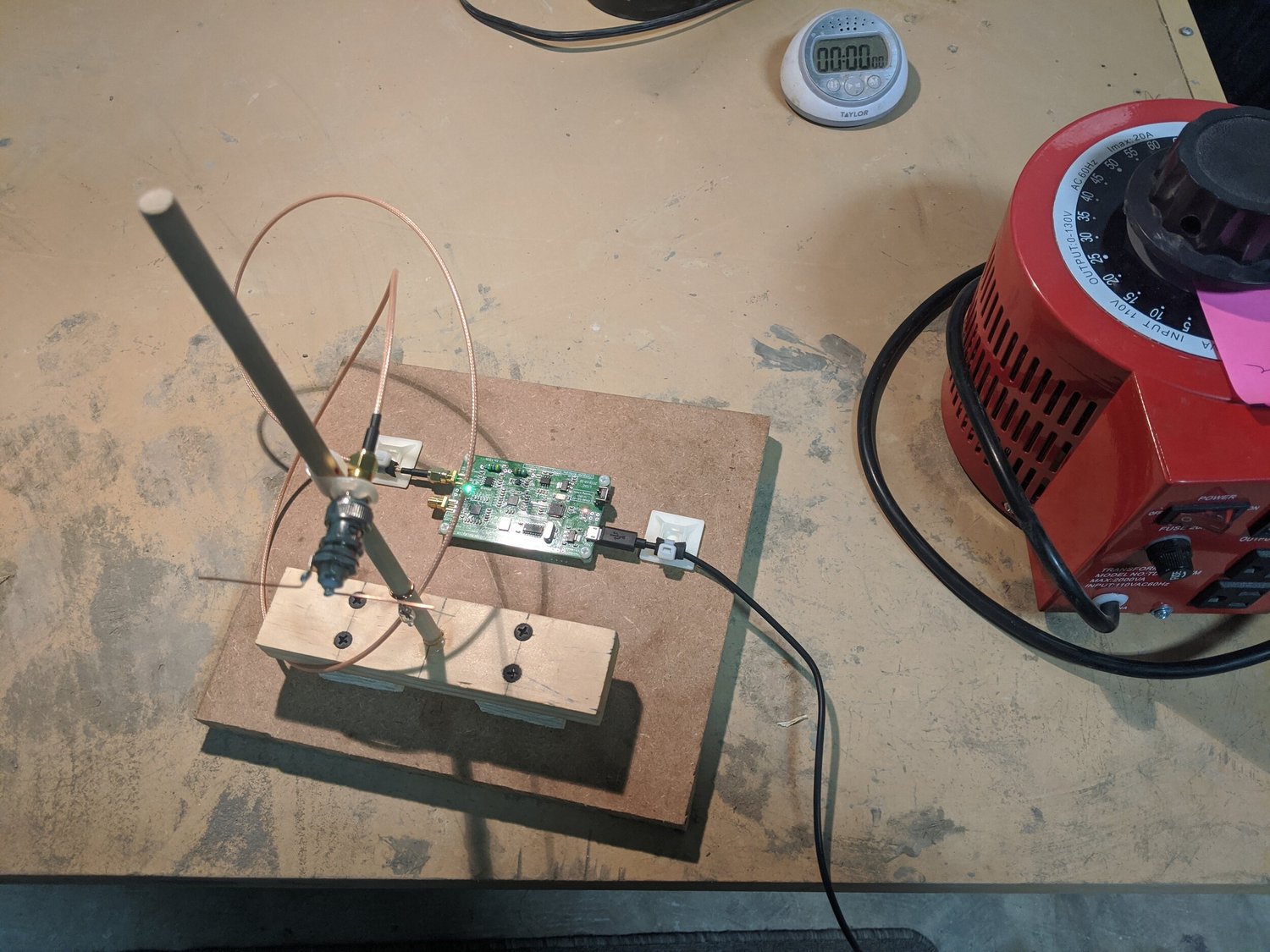
The antenna and radio-frequency measurement hardware used during the tests. This setup let me examine the received signal and its frequency content while developing the microwave-heating apparatus.
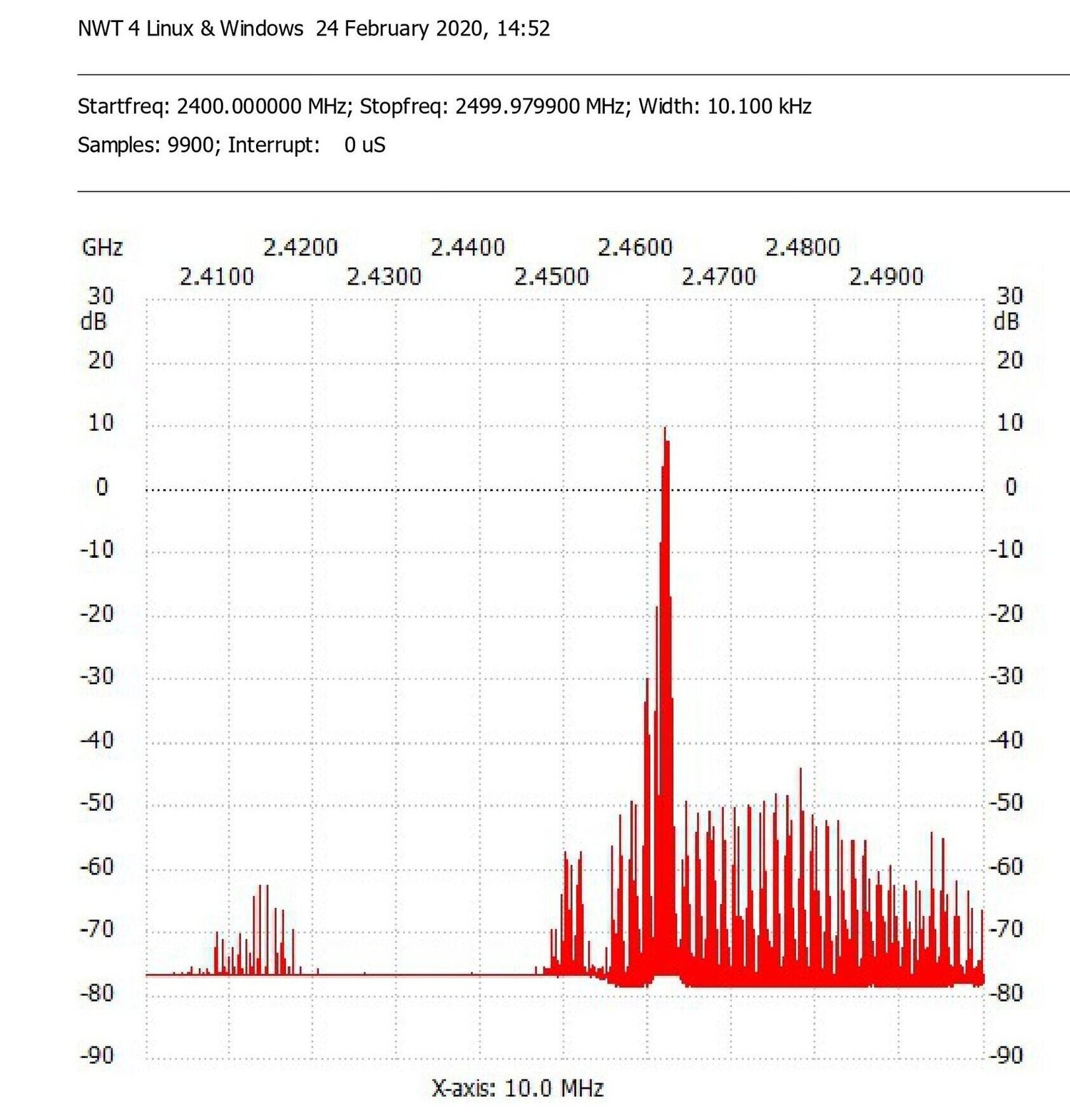
A frequency plot recorded during the microwave tests. The strongest peak is just above 2.46 GHz within the displayed 2.4–2.5 GHz range. The horizontal axis shows frequency, while the vertical axis shows the instrument's signal level in decibels, making the dominant emission stand out from the surrounding readings.
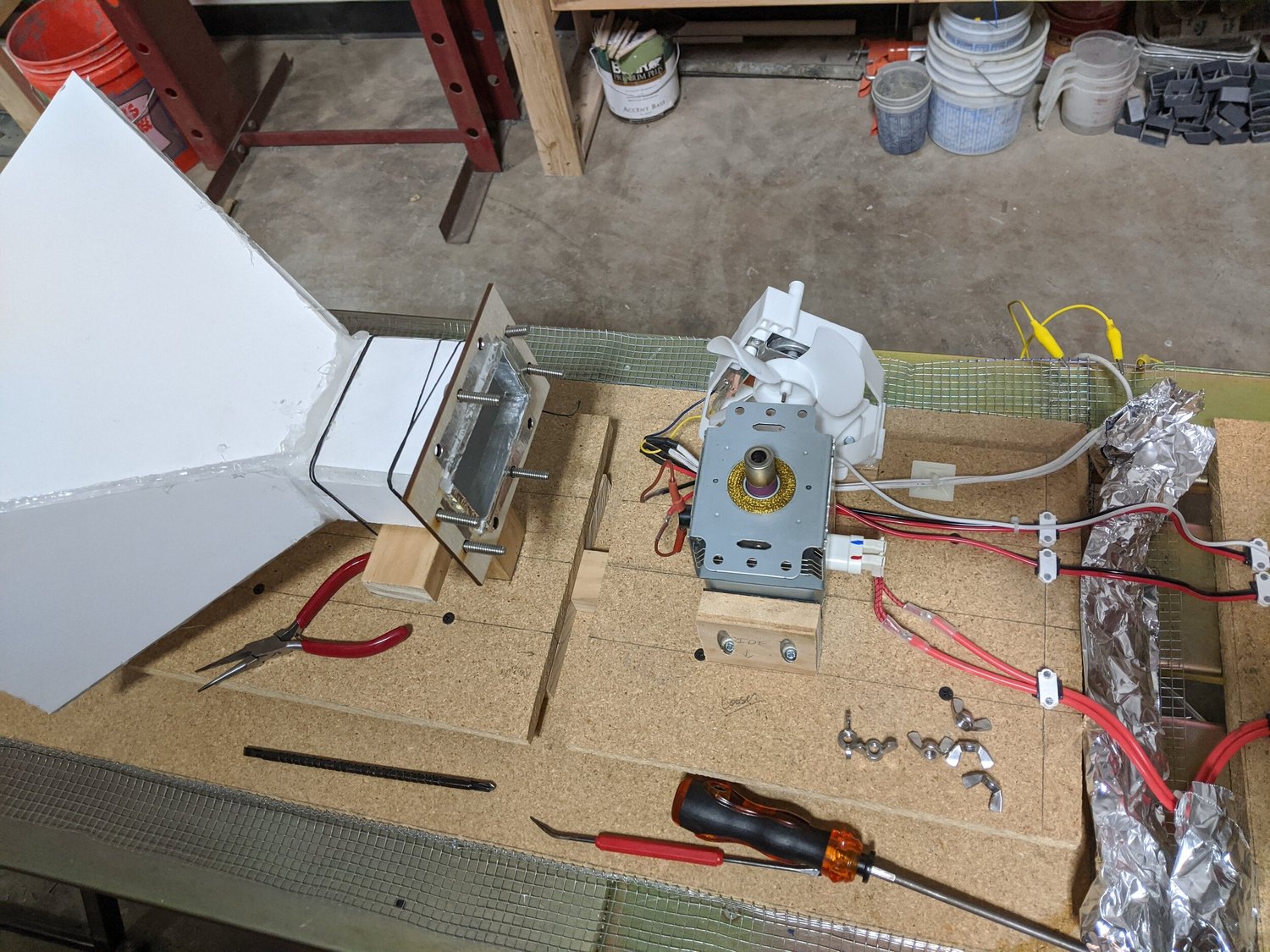
A view of the emitter head with the copper launcher removed. The project used a source repurposed from a kitchen microwave oven, with a custom launcher and horn that I made with help. This photograph documents the hardware behind the experimental heating setup.
Need a prototype for your project?
Tell me what you need to build and which constraints matter. We can discuss whether my experience fits your project.